 #36
#36

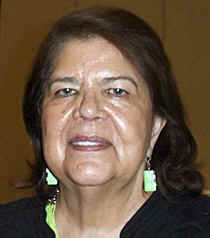
Wilma
Mankiller, First Female Chief of Cherokee Nation
I did not know her personally, but I certainly knew of her. Was it not ironic that the first female Chief of the whole Cherokee nation would have a name like Mankiller? From what I recall following of her career, her pivotal role was not just to be the first female, but to bring the Nation into a whole new era -- similar to what all of the other First Nations had to go through. She was one who could, and did, serve notice that the Cherokee nation existed and was a force to be recognized.
I don't know where she stood on that ugly issue involving the Black Cherokees, but I was surprised by one of the comments following the article, suggesting that she oversaw the removal of the "blood quantum" restrictions on membership in the Nation, so as to include the "thin-bloods" and blue-eyed.
The comment that I added to the list was this one: "
Wilma Mankiller embodied and represented that voice of the people of this land, who have seen it despoiled and violated by a centuries-long scourge of greed, ignorance, and genocide, yet remains steadfast and firm, thanks to leaders of vision and purpose like her, so that that voice is like a guiding beacon for those who still seek peace and harmony. Much thanks to her, all ways."
Be blessed,
DGT
Indian Country Today
Wilma Mankiller, women’s rights heroine, walks on
Originally printed at http://www.indiancountrytoday.com/home/content/90011057.html
WASHINGTON – Wilma Mankiller, former principal chief of the Cherokee Nation, passed away at age 64 in the morning hours of April 6 after a battle with pancreatic cancer.
Mankiller was best known for her leadership of her tribe, at which she served 12 years in elective office, the first two as deputy principal chief followed by 10 years as principal chief.
During her time in office and beyond, she was viewed nationwide as a strong Native American advocate, and had many friends in the women’s rights movement.
Mankiller retired from public office in 1995, but was never far from the public eye, serving as a board member on various organizations, including the Women Empowering Women for Indian Nations nonprofit. She also shared her wisdom at several learning institutions, including the University of Arizona.
Among her many honors, she was awarded the Presidential Medal of Freedom by President Bill Clinton.
“Our personal and national hearts are heavy with sorrow and sadness with the passing this morning of Wilma Mankiller,” said Chad Smith, principal chief of the Cherokee Nation, in a release.
“We feel overwhelmed and lost when we realize she has left us but we should reflect on what legacy she leaves us. We are better people and a stronger tribal nation because her example of Cherokee leadership, statesmanship, humility, grace, determination and decisiveness. When we become disheartened, we will be inspired by remembering how Wilma proceeded undaunted through so many trials and tribulations.
“Years ago, she and her husband Charlie Soap showed the world what Cherokee people can do when given the chance, when they organized the self-help water line in the Bell community. She said Cherokees in that community learned that it was their choice, their lives, their community and their future. Her gift to us is the lesson that our lives and future are for us to decide. We can carry on that Cherokee legacy by teaching our children that lesson. Please keep Wilma’s family, especially her husband Charlie and her daughters, Gina and Felicia, in your prayers.”
Mankiller requested that any gifts in her honor be made as donations to One Fire Development Corporation, a nonprofit dedicated to advancing Native American communities.
Tax deductible donations can be made at www.wilmamankiller.com as well as www.onefiredevelopment.org. The mailing address for One Fire Development Corporation is 1220 Southmore Houston, TX 77004.
According to the Cherokee Nation, Mankiller’s memorial service will be held April 11 at the Cherokee Nation Cultural Grounds in Tahlequah, Okla.
____________________________
October 12, 2009 - "Columbus Day"
"In war we fight to stay alive. In peace, we must also fight, but the
fight is to stay awake to our discipline of caring, listening, compassion,
and understanding. We must call upon the deepest source of our wisdom to
change our history." -- Wind Eagle
Reflections on Columbus Day:
"In Columbus' logs from his first voyage, he is continually astounded by the kind and thoughtful ways of the people he meets. Here are a few excerpts during the weeks after October 12, 1492:
"And the people are all so gentle...These are the friendliest
people...there cannot be better or more gentle people than these anywhere
in the world... The chiefs are men of few words and fine manners, it is a
marvel...The houses of the Indians are the most beautiful I have ever
seen...They are well swept and quite clean inside, and the furnishings are
arranged in good order." On Columbus' second voyage, a
compatriot of Columbus noted that the native people came out "to
greet the ships with gifts of fish and fruit, as if we had been
brothers."
Columbus thought that these people were a living expression of God, and
the word Indian actually comes from the Spanish 'in Deos,' or in God. What
an oddity it was, then, that they were wiped out in the name of
Christianity...Pope Alexander VI issued the Bull Inter Caetera (May 3,
1493) granting the right to the monarchs of Spain to own, possess, and
exploit any part of the Earth not already under control of a Christian
nation. The real destruction began after his second voyage, which left for
the Americas in 1493. This time there were 17 ships, and about 1,200
men. The arriving Spaniards were shown the same kindness and
humanity as on the previous voyage, but this decency was not reciprocated,
and in a generation's time, millions of native people were dead, and
nearly every Caribbean island thoroughly devoid of its original
inhabitants. As Columbus traveled through the Caribbean
islands, in each place he would read the following fearsome document
giving the Church and the monarchy of Spain the right to seize the lands,
and if necessary, kill the occupants:
"I certify to you that, with the help of God, we shall powerfully
enter into your country and shall make war against you in all ways and
manners that we can, and shall subject you to the yoke and obedience of
the Church and Their Highnesses. We shall take you and your wives and your
children, and shall make slaves of them, and as such shall sell and
dispose of them as Their Highnesses may command. And we shall do you
all the mischief and damage that we can, as to vassals who do not obey and
refuse to receive their lord and resist and contradict him."
In a generations time, millions of native peoples were dead, and nearly every
Caribbean island thoroughly devoid of its original inhabitants. In
time more than 95% of the first peoples of the Americas (an
estimated 15 million) would perish and their way of life would be lost for
ever." -- Excerpted and adapted from American Indian Prophecies by Kurt
Kaltreider(Hay House, 1998)
As we consider these impacts of "Columbus Day" - observed by
many millions of people as Indigenous People's Day - in the light
current global affairs, what lessons from the past are asking for our
deepest reflection and understanding to inform our response to the present
situation?
May we all, individually and collectively, have the courage to look for and listen to the stories that bring the wisdom and compassion we need to heal the wounds of our past---and present, and learn to live together and with the Earth in ways that honor the sacredness and potentials of life.
For two very moving accounts of modern day examples of
colonialism colliding with indigenous peoples we encourage you to watch the
following two segments from DemocracyNow illuminating the situation in Guam
and Diego Garcia Islands.
www.democracynow.org/2009/10/9/guam_residents_organize_against_us_plans
www.democracynow.org/2009/10/9/forcibly_exiled_for_nearly_40_years
If you live in the Seattle area, we warmly invite you to join us for a
series of classes to be offered at our homes on Sunday afternoons in the
weeks to come.
For info visit: http://web.me.com/levey1/Meditation/Workshops+Retreats.html
Also - we
invite you to attend a special workshop with us at
the Pegasus Systems Thinking in Action Conference in Seattle Nov. 2-5
Now More Than Ever: Critical
Skills for Courageous Organizations
"Teach Them
Courage":
U.S. Army's Jedi
Warrior Training Program
Dr. Joel and
Michelle Levey
The U.S. Army's acclaimed Ultimate Warrior Training Program
(a/k/a "Jedi Warrior") was described by West Point leaders as
"the most exquisite orchestration of human technology we have ever
seen." The methods distilled in this organizational learning
laboratory have great relevance for leaders in complex, high-stakes
systems who seek wisdom, resilience, mindful presence, collective creative
intelligence, fierce compassion, and courage. In this session, learn core
principles and skills from this intensive training that you can apply in
your work. With practice, these core disciplines allow insight and
intuition to deepen, courage and confidence to grow, health and
performance to improve, and innovation to be guided by a wisdom congruent
with the pressing needs of the times.
In this workshop, you will:
-
Discover how to better understand and optimize your mental and emotional responses to challenging situations.
-
Learn skills for gaining greater mindfulness, clear presence, calm intensity, and mastery of attention.
-
Take away an understanding that your own example, decisions, and actions may have profound impact on the lives of countless other stakeholders. [Source]
* * * * * * * * * * * * * * *
From
the Eagle Watch #164
July 27, 2011
This news of the Canadian government ultimatum on Native land claims is
nothing less than sabre rattling in preparation for declaring war.
Maybe it can be seen as a good thing so that Indigenous will realize
once and for all that Indian Affairs, the Crown and the Government of
Canada never had and never will have any intention of doing the
"right thing". Native land claims cannot be settled in
Canadian courts.
WHAT ARE WE GOING TO DO NOW? Kittoh <kittoh@storm.ca>
We
welcome your feedback! Forward, post and consider printing for
your cyberphobic friends and relatives.
The Eagle Watch Newsletter is sent to interested individuals, both
Indigenous and non-Native, politicians especially the Canadian ones and
an assortment of English language media.
This
article appeared in yesterday's Toronto Star
First Nations seeks clarity on reports of land claims ultimatum
The
Assembly of First Nations wants an immediate clarification from the
federal government about reports that Ottawa is moving to cut off
specific land claims negotiations.
The group says that if the reports are accurate, many First Nations will
be beside themselves with anger, since the move would violate the spirit
of previous arrangements.
APTN National News is reporting that Ottawa is leaving Indian bands with
a take-it-or-leave-it option on the government's final offer.
The news network says that if a First Nation rejects the government's
final offer, the only recourse will be to take the claim before the
Specific Claims Tribunal a body that has a $250 million cap each year
for settling claims.
APTN quotes negotiators for First Nations, who did not want to speak on
record, as saying they have been informed of the move by negotiators for
the federal government, and that it will come into effect in October.
The
Canadian Press
* * * * * * * * * * * * * * *
INDIAN MEANS "IN GOD"
June 18, 2008, Fort Lauderdale, FL
From a spiritual point of view, what [the Prime Minister] has done is release the bonds that have held us from being able to forgive,” Harper said.“
The [Canadian] government now recognizes that the consequences of the Indian residential schools policy were profoundly negative and that this policy has had a lasting and damaging impact on aboriginal culture, heritage and language,” Harper said.
WORDS WE SPEAK Editor’s Note: My heart is very heavy, after reading this article. The United States needs to engage in this activity, wholeheartedly. The voice of Native Americans has been quieted, not only by Euro-Americans, but by all those who have immigrated to this land without conceiving of the pain and anguish suffered by the “First Nations” who resided here for 12,000 years before the coming of the first colonialists, including Caribbeans, post-slavery Africans, South and Central Americans, Asians, Australians and New Zealanders and all those who flock to the United States in search of a better life. As the descendant of a Cherokee grandfather, I am jubilant that one group of Europeans in the New World have seen the way to apologia. – JC – divajc47@yahoo.com
Geraldine Maness-Robertson, 72, a Chippewa from Aamjiwnaang First Nation, said her six years at an Anglican school were a “horrific experience,” and her hands were often whipped with a razor strap to break her spirit.
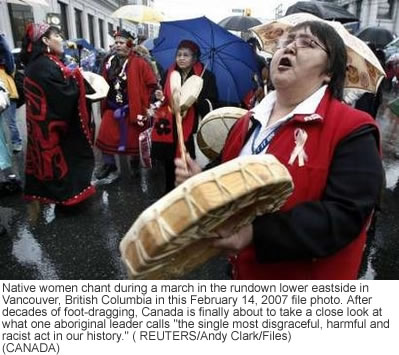
Canada’s Native People Get A Formal Apology
By Christopher Guly and Maggie Farley
OTTAWA - Canadian Prime Minister Stephen Harper apologized Wednesday to the nation’s native people for “a sad chapter in our history,” acknowledging the physical abuses and cultural damage they suffered during a century of forced assimilation at residential schools.
“Today, we recognize that this policy of assimilation was wrong, has caused great harm, and has no place in our country,” he said to applause.
A group of 11 aboriginal leaders and former residential school students sat before Harper in a circle in the House of Commons, some weeping as the prime minister delivered the government’s first formal apology to them.
In the crowded, expectant chamber, Harper bowed his head as he read a carefully crafted speech, asking for forgiveness for separating children from their families and cultures, exposing the students to abuse, and sowing the seeds for generations of problems.
Over more than a century, about 150,000 native Canadian children were sent to boarding schools run by churches and the government to “civilize and Christianize” them. Expressions of native heritage were outlawed. Many children suffered sexual and psychological abuse and grew up with neither traditional roots nor mainstream footing, their ties to family and community unraveled.
“The government now recognizes that the consequences of the Indian residential schools policy were profoundly negative and that this policy has had a lasting and damaging impact on aboriginal culture, heritage and language,” Harper said.
The apology was billed by the government as a chance to redress a dark chapter in Canadian history and to move forward in reconciliation.
But the hours before the landmark statement were marked by wrangling over whether native leaders were adequately consulted about the content, and anger that they would not be allowed to respond in the House of Commons. Just before Harper’s speech, opposition leaders led a successful motion to allow aboriginal representatives to reply in the chamber.
Assembly of First Nations National Chief Phil Fontaine, wearing a feather headdress, took the floor to declare that the occasion “testifies nothing less than the accomplishment of the impossible.” In 1990, he was one of the first to come forward with his story of abuse and push for an apology.
“For the generation that will follow us, we bear witness today . . . . Never again
will this House consider us the Indian problem just for being who we are,”
he said, as tribal members cheered and beat a drum in the gallery. “Finally,
we heard Canada say it is sorry.”
Some survivors, as the former schoolchildren are widely called, said the apology
came only grudgingly under intense pressure from native groups, and must be
matched by action. But it is widely recognized as a significant step for a
government that had previously sought to limit its responsibility for the harm
caused by its assimilation policy.
Several churches offered apologies in the late 1980s and 1990s, and the government’s
head of Indian and Northern Affairs made a statement of reconciliation in
1998. A lawsuit settled in 2006 created a $1.9-billion compensation fund, and
an independent Truth and Reconciliation Commission was launched June 1.
But Wednesday’s statement is the government’s first formal expression of
responsibility and remorse for the forced assimilation program.
Elijah Harper, 49, a Cree leader from Manitoba, said the prime minister’s speech
allowed his people to embark on the road of reconciliation. “From a spiritual point of view, what he has done is release the bonds that have
held us from being able to forgive,” Harper said.
Analysts say that the next step for the government is to settle outstanding land claims
with aboriginal groups, and to refocus policies to alleviate poverty and
improve education among First Nations.
“Even if you solved this, there are a number of issues still facing aboriginal
people,” said James Miller, a University of Saskatchewan expert on
the residential schools.
An editorial in Toronto’s National Post newspaper offered one of the few voices
defending any part of the residential school system.
“Being honest with history also means acknowledging that the residential schools did
provide the education and training that opened new horizons to their
graduates,” it said. “Many students were saved from serious childhood
illnesses, or even death, because of their access to health care. To recognize
what was wrong does not require ignoring what was right.”
But for most of the former residential school students, the focus will be on
fixing those wrongs. Many former students gathered across the country, and at Ottawa’s House of
Commons, where television screens were set up on the lawn for the crowds. Counselors were mobilized to help people deal with emotional memories triggered by the
event.
Geraldine Maness-Robertson, 72, a Chippewa from Aamjiwnaang First Nation, said her six
years at an Anglican school were a “horrific experience,” and her hands
were often whipped with a razor strap to break her spirit.
“When I left, I was so full of rage and anger and hatred,” she said. “Today’s
apology was so helpful, it hit all the areas of hurt. I have spent my whole
life reconciling, and I turned a page today.”
Canada got it right, said Sammy Toineeta, a founder of the Boarding
School Healing Project, a national coalition seeking justice for
similar abuses and loss of culture in Native American boarding schools in the
United States.
“An apology does not carry much weight unless there is something behind it. In
Canada, they got a certain amount of land and money, and then the apology,”
said Toineeta, a Lakota who attended a boarding school in Rosebud, S.D.
“That’s the way to do it. Action first and then words.”
Special correspondent Guly reported from Ottawa and Times staff writer Farley from New
York.
© 2008 The Los Angeles Times
Re-Thinking
"Columbus Day"
Yet,
Columbus also wrote: "They... brought us parrots and balls of
cotton and spears and many other things, which they exchanged for the
glass beads and hawks' bells. They willingly traded everything they
owned.... They were well-built, with good bodies and handsome features....
They do not bear arms, and do not know them, for I showed them a sword,
they took it by the edge and cut themselves out of ignorance. They have no
iron. Their spears are made of cane.... They would make fine servants....
With fifty men we could subjugate them all and make them do whatever we
want...As soon as I arrived in the Indies, on the first Island which I
found, I took some of the natives by force in order that they might learn
and might give me information of whatever there is in these
parts." The information that Columbus wanted most was: Where is
the gold? The
Indians, Columbus reported, "are so naive and so free with their
possessions that no one who has not witnessed them would believe it. When
you ask for something they have, they never say no. To the contrary, they
offer to share with anyone...." He concluded his report by asking for
a little help from their Majesties, and in return he would bring them from
his next voyage "as much gold as they need . . . and as many slaves
as they ask." He was full of religious talk: "Thus the eternal
God, our Lord, gives victory to those who follow His way over apparent
impossibilities." In
some strange way, Columbus thought that these people were a living
expression of God, and the word Indian actually comes from the Spanish 'in
Deos,' or in God. What an oddity it was, then, that they were wiped out in
the name of ChristianityŠPope Alexander VI issued the Bull Inter
Caetera (May 3, 1493) granting the right to the monarchs of Spain to
own, possess, and exploit any part of the Earth not already under control
of a Christian nation. The real destruction began after his second voyage,
which left for the Americas in 1493. This time there were 17 ships,
and about 1,200 men. The arriving Spaniards were shown the same
kindness and humanity as on the previous voyage, but this decency was not
reciprocated, and in a generation's time, millions of native people were
dead, and nearly every Caribbean island thoroughly devoid of its original
inhabitants. As Columbus traveled through the Caribbean
islands, in each place he would read the following fearsome document
giving the Church and the monarchy of Spain the right to seize the lands,
and if necessary, kill the occupants: "I
certify to you that, with the help of God, we shall powerfully enter into
your country and shall make war against you in all ways and manners that
we can, and shall subject you to the yoke and obedience of the Church and
Their Highnesses. We shall take you and your wives and
your children, and shall make slaves of them, and as such shall sell and
dispose of them as Their Highnesses may command. And we shall do you
all the mischief and damage that we can, as to vassals who do not obey and
refuse to receive their lord and resist and contradict him." "In
a generations time, millions of native peoples were dead, and early every
Caribbean island thoroughly devoid of its original inhabitants. In
time more than 95% of the first peoples of the Americas (an
estimated 15 million) would perish and their way of life would be lost for
ever." -- Excerpted and adapted from American Indian Prophecies by
Kurt Kaltreider (Hay House, 1998) May
we all, individually and collectively, have the courage to look for and
listen to the stories that bring the wisdom and compassion we need to heal
the wounds of our past---and present, and learn to live together and
with the Earth in ways that honor the sacredness and potentials of people,
traditions, and cultures around the globe. We
encourage you to read: Columbus, the
Indians, and Human Progress excerpted
from A People's History of the United States by
Howard Zinn http://www.thirdworldtraveler.com/Zinn/Columbus_PeoplesHx.html
Thought
for the Day from http://www.WisdomAtWork.com
NATIVE
AMERICAN INDIAN GENEALOGY CULTURE It is rather an endless struggle that will go on to the very last
moment of our lives.
No one is born a warrior, in this same way no one is born an average
man. We make ourselves into one or the other. [Source] "Pecking order" of the races
found very prevalent in our historical Southeastern U.S. (despite Indian
genetic blending and adoption of culture). The pecking order then: Caucasian
European-->African Black--> Indian
Twas not an uncommon practice in this U.S. region for a person of mixed
race (Caucasian Indian or Black Indian) to attempt escape from the severe
prejudice held against being known as an Indian. If one had more dark or
light skin, most identified openly as being either Black or White...for
survival sake. One has to understand that much of the current prejudicial
thought at the time was that Indians were either savages, soulless, or not
being even a human being. Choosing to identify as either Black or White
(despite one's true heritage) elevated oneself into being a member of the
human race, more civilized/civilizable, and more worthy of respect (the
little that it gained) in this part of the country.
Case in point: Indians were seen as unclean, savage pagans and most Anglo-Americans
refused to accept them in their schools, churches, schools, towns or even
in their states. Racial groups targeted Native people and even President
Theodore Roosevelt remarked "I don't go so far as to think that the
only good Indians are dead Indians, but I believe nine out of ten are, and
I shouldn't inquire too closely into the case of the tenth. The most
vicious cowboy has more moral principle than the average Indian."
Taken from THE NATIVE TRUTH
By 1900, African Americans outnumbered the Native American population in
areas that had been set aside as Indian Territory by the federal
government. One Native American newspaper commented on the irony of
whites stealing "land from the Indians only to have negroes take it
from them." African Americans and American Indians often
intermarried and formed a mixed population.
 We live in mythical times that continually
remind us that much of the history (i.e. "his-story") that we
grew up with has given us but a partial and distorted view of past events
-- and usually from the point of view of those in power, and not from the
point of view of "the people." As many of these cherished
myths come crashing down around us, we are invited to pause and
revise--sometimes radically--our sense of "what on earth has been
going on." In that spirit, we offer the following
"myth-busting" notes on this day of celebrating/protesting
Columbus Day (in the US): "In Columbus' logs from his first
voyage, he is continually astounded by the kind and thoughtful ways of the
people he meets. Here are a few excerpts during the weeks after
October 12, 1492: "And the people are all so gentle. These are the
friendliest people. There cannot be better or more gentle people than
these anywhere in the world. The chiefs are men of few words and fine
manners, it is a marvel. The houses of the Indians are the most beautiful
I have ever seen. They are well swept and quite clean inside, and the
furnishings are arranged in good order." On Columbus' second
voyage, a compatriot of Columbus noted that the native people came out
"to greet the ships with gifts of fish and fruit, as if we had been
brothers."
We live in mythical times that continually
remind us that much of the history (i.e. "his-story") that we
grew up with has given us but a partial and distorted view of past events
-- and usually from the point of view of those in power, and not from the
point of view of "the people." As many of these cherished
myths come crashing down around us, we are invited to pause and
revise--sometimes radically--our sense of "what on earth has been
going on." In that spirit, we offer the following
"myth-busting" notes on this day of celebrating/protesting
Columbus Day (in the US): "In Columbus' logs from his first
voyage, he is continually astounded by the kind and thoughtful ways of the
people he meets. Here are a few excerpts during the weeks after
October 12, 1492: "And the people are all so gentle. These are the
friendliest people. There cannot be better or more gentle people than
these anywhere in the world. The chiefs are men of few words and fine
manners, it is a marvel. The houses of the Indians are the most beautiful
I have ever seen. They are well swept and quite clean inside, and the
furnishings are arranged in good order." On Columbus' second
voyage, a compatriot of Columbus noted that the native people came out
"to greet the ships with gifts of fish and fruit, as if we had been
brothers."
As we consider these impacts of "Columbus Day" in the light of
the "popular myths" of our current global situation, let us
ask," What lessons from the past invite our deep reflection to inform
and inspire how we hold and respond the circumstances of our modern
times?"
Every society, culture and people is judged by how it treats it's least
fortunate amongst them.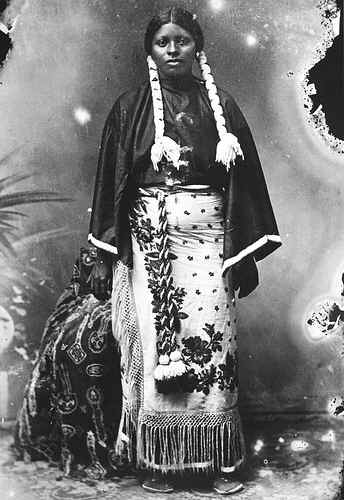
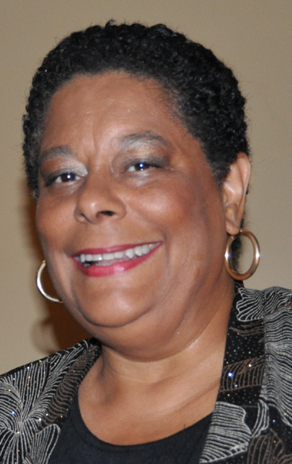
Joan Cartwright
Granddaughter of Savage Logan
Cherokee Nation
and Mary Deal, Arawak Nation, Bahamas
Thank you so much, Joan, for sharing this.
I always appreciate a reference to Indigenous Peoples Day (although, like you, I am equally if not more saddened by why it must be so). Back in 1992, when the Columbus hype and hoopla around the 500th anniversary of his uninvited intrusion were at their offensive peak, I wrote to then-Senator Bob Graham (something I very rarely do is to write politicians in the hope of doing any good), inviting him to take the lead in changing the official name of the holiday, and letting him know that in any case, with or without his or Congressional approval, the people would change the name anyway. So you can see why this affirmation gladdens my heart, as I hope it also does, in some small way, for those who remain of the First Nations (now a bare 3% of the total U.S. population -- a scandal before God and man that goes unacknowledged, except -- most significantly -- in communications like this one that you have shared; I recently wrote another friend on this subject too, so there is "buzz" out there, and I am encouraged by the assertion that there are now "millions" who feel as we do.)
I am also grateful for the reference to the recent publication by Kurt Kaltreider. I'll have to look for this. There cannot be too much information -- of the accurate variety -- on this. Back in 1992, when a couple of us wrote pieces for The Miami Times, I shared the name of another publication, "Columbus: His Enterprise," by Hans Koning (or Koningsberger; evidently it was published under both names), and I was glad to see that it sparked quite a bit of interest at the public library. Its graphic documentation of the sheer barbarity of Columbus' treatment of the peoples he encountered is most revealing. My own earlier awakening to much of this came from my life-changing reading of "Bury My Heart at Wounded Knee" by Dee Brown. I still get chills and choked up just to think about it. (And, to think, much as in our study of the Middle Passage, the most difficult thing we have to do is read this stuff and come to terms with what is reported; what of those who actually had to live through the experience, physically, mentally and spiritually?) That such reading is not required in schools says much about our society and why it continues to be the way it is. On the other hand, the positive side, such as it is, there is also the epic "Hanta Yo," by Ruth Beebe Hill, which takes us into the world of the Lakota in much the same way that Chinua Achebe's evocative and atmospheric novels place us in traditional Ibo culture.
There was one small point in this message that particularly caught my interest, mainly because of the fluke of circumstance that I have a formal educational background in linguistics, etc., and that was the idea that the word "Indian" (Indio in Spanish), would have derived from the Latin "in Deus" (more or less), meaning "in God." According to my own limited knowledge of history, the origin goes back to the Indus River, and the country named after it, India. When Europeans, during the Crusades, became aware of the fabulous wealth and knowledge that they beheld in the Muslim lands and inquired as to where much of this stuff -- silks and spices -- came from, the story goes, that they were told of somewhere far to the east, vaguely known as "the Indies." This is what would launch the European "age of exploration" (to circumvent the Arab trade monopoly in the Mediterranean) to find this legendary place, with the Portuguese making their way gradually around the continent of Africa, and the Spanish, having been sold on the idea by Columbus, heading westward based on the notion that the world was round. Columbus, in order to get paid, had to convince his sponsors, "their Highnesses," Ferdinand and Isabela, that he had indeed reached India, as promised, ergo, the people that he brought back as captives had to be "Indians" (Indios). Their own names for themselves mattered not. That shows a motive for, but not the origin of, using the word. Maybe the most curious of all is what our friend Hummingbird, the self-described Carib Indian Queen, who conducts the weekly prayer vigils at the Miami Circle, says about this. She evokes the word Indio in some of those fervent prayers, and explains that it is a very sacred word to the Native peoples, as if it was in the language long before Columbus arrived. I never asked her about this, but now I guess I will. (Human language has so many fascinating twists and turns like this, which I find to be very interesting, especially since it is language which shapes our thoughts and our mental understanding of the universe; the Introduction to the aforementioned "Hanta Yo," for example, contains a list of about 17 English words for which the Lakota language has no equivalent word or even concept, including such everyday terms as "us," "them," "if," and "because," among others.)
Our Prez made another typically brilliant speech recently, at the UN General Assembly, in which he made a passing comment which triggered a thought which has stuck with me ever since. I don't remember the exact quote, but it had to do with how much the world is impoverished by the loss and waste of human potential because of oppression. For our generation, thanks in large part to the work of the late Dr. Eric Williams, the first head of independent Trinidad & Tobago, it has been an article of wisdom to point out how much of the present-day distribution of material wealth (and therefore power) in the world is the result of the huge concentration of profits that came from the slave trade and slavery -- centuries of uncompensated labor, skills and knowledge. Indeed, this awareness is what drives the Reparations movement. Yet, as important as this point is, it fairly pales in comparison to the flip side, which is what Barack Obama alluded to: How much genius, intelligence, talent, insight -- how many notes, so to speak, out of the Divine symphony -- have been destroyed, stifled and wasted in order to benefit the greed and corruption of a few? Dr. Williams focused on "Capitalism & Slavery," and the profits earned at all three points of the trade triangle, at Africa's expense. But I remember the words of one of my father's buddies which I overheard as a youth as the men reasoned on the human condition at the time: "Compared to the Indian, the Black man has been treated royally! Royally!" Not only did the genocide against the Indigenous Peoples lay waste to entire nations, and what so many individuals within those nations had to offer, but, in doing so, it also wiped out so much knowledge of the harmonious spiritual connections between humans and these particular lands.
How many centuries of "reparation" would it take to restore that balance?!
Today is treated as a holiday -- a day off from work, to enjoy sales in stores, gather with family, get drunk or whatever -- all blithely oblivious of the land on which we celebrate, which nurtures our lives, and how we came to be on this land in the first place. I truth, we are in solidarity with all of the world's Indigenous Peoples, as we observe a day for somber reflection (and yes, joyous gratitude for having the health and capability to do so; somber doesn't need to be morbid). The length of the road to reparation is beyond our imagination, but what we do know with certainty is that, as the Chinese proverb says, "A journey of a thousand miles begins with a single step." Redefining the "holiday," as so many of us have begun to do, is surely a significant step on the path back to health.
Thanks much, again, for sharing this, Joan.
Be blessed, all ways,
Gene
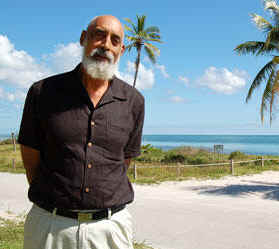
Dinizulu Gene Tinnie
(Reference left column: July 27, 2011)
Another sign of the times. (It has been said that "the darkest hour is just before the dawn," and that "things have to get worse before they get better," and much of human history seems to prove that to be true, although history does not often record the many times when human wisdom has avoided such madness.)
The definition of intelligence is awareness. Knowledge is power. This needs to be diagnosed as being exactly what it is: Settler "nations," founded on the principle of genocide and "white supremacy," trying very hard to avoid looking in that mirror called justice. There is no escape. The old curtains of myths and lies are falling fast, revealing mirrors in every direction. We must be prepared for the ensuing madness, even as we might try hard to make wisdom prevail.
* * * * * * * * * * * * * * *
Saturday, February 20, 2010 12:03 PM
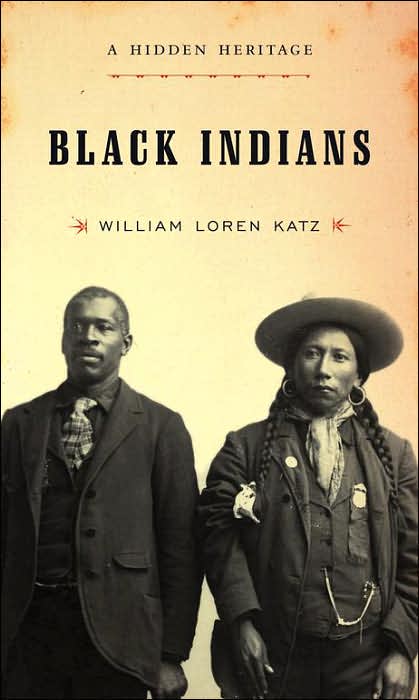
Black Indians and Diplomacy
Halito Brothers and Sisters!
I, Angela Molette (Tuscaloosa Ohoyo) Black Warrior Woman, Representative and Spokesperson of Black Indians United Legal Defense and Education Fund, will (again) be in Washington D.C., on Thursday, February 24th in the Halls of Congress.
I will serve as an Emissary, Diplomat and Chief representing Ethnic Indigenous Nations (Black Indians, Freedmen Nations and Individuals) of the 5 Civilized Tribes.
I am bringing with me, Chief William “Dub” Warrior, a living descendant of the Seminole Negro Scouts, from the famous Band of self-emancipating Black Indians led out of Oklahoma by John Horse and Wild Cat, to the southern border of the Republic of Texas and Mexico.
They escaped Oklahoma Indian Territory under the tenets of a natural Sovereign Freedom denied nearly every other Band of Ethnic Indians of the 5 Civilized Tribes. The rest of our Ethnic Tribal Bands were quarantined by the parent Tribes after their escape and were disallowed to leave, to revel in the same Sovereign Freedom outside of Indian Territory. So our ancestors were forced to remain there in their own original patented Autonomous Colonies and Communities within the geographical jurisdiction of the 5 Civilized Tribes. Our true stories of survival can only be told by us.
We will stand along with Dr. Claud Anderson of the Harvest Institute Freedmen Federation of Washington, D.C., author of Powernomics. We also represent a Class Action Claim against the United States Government, on behalf of the Ethnic Indigenous Nations and Indian Freedmen of the 5 Civilized Tribes.
This communiqué shall
serve as an invitation to an Executive Administrative Level
Representative of Moors in the Washington, D.C. area, to stand with us
as Diplomats and survivors of the First Ethnic Indigenous Nations of
People of the Hemisphere.
Sundry Free Moors (Subjects of the Emperor of Morocco, Tunisia,
Algeria and Libya), as well as those African Moors (receiving Spanish
Land Grants) who were settlers under the Narveaz, Menendez, Allyon and
De Soto Expeditions (prior any European establishment of
Colonies). Moors represent Ethnic Nations amalgamated with the 5
Civilized Tribes. Their ancestors were also affected by and removed
during the 1830s under America’s Indian Removal Policy into
Oklahoma. They established colonies of Free Persons of Color among
the 5 Civilized Tribes represented by the Treaties of 1866.
Barack Obama, touted himself during his Presidential Campaign, as a Diplomat and a welcome change from the immature avoidance tactics employed by the Bush Administration .We are arriving in Washington, D.C., as Diplomats and Representatives of our people.
After feeling Battle Weary and Worn during my last trip to Washington, D.C., I promised myself that I would never come again. I was not put off by the wonderful people in Chocolate City, residing outside the walls of 1600 Pennsylvania Avenue or the Halls of Congress.
On the contrary, the People of Washington, D.C., made me feel welcome and loved. Every avenue we traveled upon or ventured down, including the Anacostia area during our Black Indian Trail of Tears March on Washington, people gathered around to greet Black Indians from Oklahoma with smiles of recognition, genuine warmth and their own stories of Native American Ancestry. They were a Godsend! A beacon of light during the dark days of the Bush Administration in 2004.
Of course, then President, George Bush raised the faux Terror Level upon our arrival and then ran for cover to avoid any interactions with us. The elevated Terror Level lasted the duration of our demonstration. Bush sent every available Park Service Police Officer to monitor our peaceful demonstration on the Mall. Our Black Indian Trail of Tears March on Washington occurred the same year that the Journalist of Color held their Convention around the corner from our demonstration. None of them attended our March, but something very interesting happened involving them while we were in town.
Mr. Bush ran to hide over there among the Journalists of Color and ran straight into one that asked him, “What is Sovereignty?" on Camera! His response was priceless, Bush, seemed to have gone Catatonic right there in front of God and Man.
He could not answer. Words could not escape from his lips. Although he eventually babbled something, it was not memorable and it certainly did not explain Sovereignty. I was unable to see the news snippet of the Bush brain freeze until later that same night on Television. To tell the truth, that alone might have made the entire trip worth it.
No, my feelings of battle fatigue came not from the D.C. public at large, but from dealing with Washington Politicians who don’t seem to understand the gravity of their importance to the people inhabiting the rest of the States in this Country. These Congressional people (and their "staffers") have been installed by the people, to represent the interests of the people.
What we have found since that time is that Washington Politicians don’t read and can’t comprehend a large percentage of the issues brought before them by the people of America. The Representatives sent to Congress prefer only to attend to “issues” brought up by their own constituents having enough money to hire lobbyists to “buy” the interest of the very Congresspersons who are supposed to hang their shingle on the door advertising their free availability to “the people” through open door policies.
We also found that if the “staff” of Congresspersons do not “understand” your issue, the probability of constituents or persons wishing to meet with Congresspersons diminishes further. The “staff” is reticent to deliver your messages, arrange meetings or to get the Congresspersons to read your communications sent explaining your position.
No wonder the average person has no modern fear of Black Politics. We have been neutered by Black Politicians. White America can count (like clock work) on capitulating Black Politicians to slam the door on most concerns of the Black Masses of Humanity.
That is where the shame of this country lies. Black Politicians seem to have squandered the Civil Rights advances gained by our parents struggles in the 60s. Installment of more Black Politicians was supposed to eliminate the need for Black people to March in the Streets.
Now, in 2010, staff of Congressional Members (particularly) Black Caucus Members are recommending that Black People March in the Streets (in that good old time-honored Negro way) in order to get Congress to address our issues. For Black People this comprises Boxing's Right Cross.
Black People are now relegated to petitioning the "powers that be" for a “permit” (or permission) to commit civil disobedience (to March). Furthermore, demonstrations can only be held in selected places, mostly out of the view of people whose attention you are hoping to attract. It is all so "civil". For Black People this comprises a Left Hook.
As for the Oklahoma Congressmen, Coburn, we can't reach him in Oklahoma and certainly not in Washington, D.C. As our State Congressperson (he has publicly stated his opposition to our efforts). He intends to send in a “token” Indian staffer to meet with us, instead of meeting with face-to-face. This is a Roundhouse for Black Indians.
Neither does the Oklahoma lawmaker support Provisions of Separation for Black Indians, because he says it gives “Federal Recognition to suspect tribes.” He also thinks Black Indians should challenge the Treaties of 1866 (“for validity”). Yeah, right. They have made certain that we remain poor, penniless and can in no way afford to continue to file expensive law suits and travel back and forth to D.C.
Congressman Coburn did not stand on that same position when he authored the Provisions of Separation Bill for the Delaware Nation arising out of the Cherokee Nation (based upon the same 1866 Treaties). Regardless, this represents a TKO! For Black Tribes.
There may be some Color of Law Challenges in store for Coburn, based upon his unequal treatment and disparate representation of the Ethnic Black Indians and Freedmen of the 5 Civilized Tribes.
By the way, a formal request must also be submitted in order to gain an audience with the President. For Black People this represents a devastating Uppercut.
However, the Technical knockout (TKO) comes as the Black President is using fancy foot work to avoiding meeting with us (as a Diplomat), because we are “litigants in a lawsuit against the United States Government."
Wouldn't the same hold for any Ethnic group leader in current litigation against the United States?
I would think so, but it makes me hold out Cobell as an example of why that position of the Obama Administration does not hold equally across the board.
Eloise Cobell and Black
Pinto Horse
Eloise Cobell (Native
American), a sweet woman and a fearless fighter for her people, was
also a litigant in a Federal Lawsuit, but contrasting the disparate
treatment suffered by Black Indians, she was actually ushered into
Congress by supportive Congressional Staff and had the Department of
Justice Attorneys to meet with her and her attorney to hammer out a
$3.4 Billion settlement, bearing language which is harmful to Black
Indians.
The Cobell Settlement allows the U.S. Federal Government to claim that
they can only account for Indian Trust Funds and Trust Land Accounts
only as far back as 1887.
Black Indian Trust Funds and Trust Lands were established in 1866. This represents an attempt at an end-run around the mandates of the 1866 Treaties, which specifically set aside Indian Trust Lands and Trust Accounts for Native Americans having African Ancestry.
In my mind, this means Black Indians and all of Black America ought to be mad about what is happening to us. Minimally, Congress and the Black Caucus should be joining us in public opposition of any language that purposefully or mistakenly endangers the legal Treaty Rights, Mandates and/or Claims of Ethnic Black Native Americans.
The language in the Cobell case needs to be rendered harmless to Black Indians!
Our Class Action suit alleges and perhaps mirrors the same Fiduciary Failures that includes Indian Trust Lands and Indian Trust Accounts. It is the same issues alleged in the Cobell Claim and the complaint is against the same Trustee. There is nothing mysterious or hard about understanding that. We are the same Class of Citizens as the Indians in the Cobell suit, only we are representing the legal Treaty Rights of Ethnic Black Indians.
Our reparations claim is at stake. Can Black People of America understand that?
Shouldn’t Congresspersons be at least as intelligent as the average Black person in America?
They need to quit being timid because they don't know anything about what they never studied. Even those that "learned" history from those that "conquered" America must here the stories told from the perspective of those most affected by that "history", which is replete with misunderstandings.
If you don't learn anything else in your lifetime, please understand this:
The 1866 Treaties were authored by Union Loyalist Factions of the Tribes. They knew very well that they were enfranchising the Black Members of the Indian Nations. They were the winners of the Civil War. They even had Black Indians participate in the Treaty-making process and they signed the Treaties as signatories, interpreters and witnesses.
The only persons claiming that the Indian Nations were "forced" to make concessions for Black Tribal Members are the descendants of the Confederate Factions of the Tribes. They were the losers of the Civil War. They hated Black People then and they hate them now.
They have taken over the modern Tribes in large numbers.
Doesn't that make sense to you?
What the Congress Members (and their “staffers”) fail to understand in their blocking and hedging actions, is that Black People voted them (and their bosses) into office to represent the true and/or best interests of the people. If they can’t represent our issues, then they need to quit occupying space. Relinquish your position and give it to a person of good intent who understands what a meaningful position they hold.
It is our job to call out poorly performing Congresspersons and their staff when they are working in stark opposition to Diplomatic efforts to empower Blacks monetarily with Trust Money and Trust Lands that rightfully belong to us (by the language of Treaties). Make no mistake people, this is the most important issue of our times.
We also have a responsibility to enter our formal opposition to any Congressional Bill which so obviously intends to cause harm to our people.
All those persons desiring Autonomy and Reparations, If Black Indians are unsuccessful…with our Treaties (written in Black and White), then it should become very apparent that you stand no chance at all to be accorded diplomatic solutions to the massive problems facing Black America today!
Your problems will occur because you have no legally recognizable Indigenous Nationality and no papers proving who you were. Add to this a Congress that refuses to represent you or your issues in your present condition and the picture becomes more bleak as it is revealed.
You will be unable to stand up as a Country demanding reparations from the U.S. Country. You will remain subjugated in the work-a-day world of your captors, trapped in a non-existent (diversity) that is of so little consequence that this President, Leader of a World Power and Congress can ignore you for a lifetime.
See you in D.C.
Sincerely,
Angela Molette (Tuscaloosa Ohoyo) Black Warrior Woman
See also #66 On Immigration