 #57
#57

THE JAZZ LIFE - Paying to Play
This is by noted trumpeter Marvin Stamm. It is an important and sobering article we should all pay attention to, reflecting on the state of the jazz club scene today.
New York Jazz Clubs by Marvin Stamm
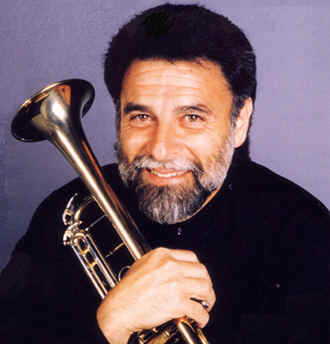 When on tour, I am often asked about the Jazz scene in New York City and
the clubs that feature this music. Most of my work these past 15 years is
out of town "on the road," but when at home I most often do concerts
with my quartet, in duo with Bill Mays, or with the Westchester Jazz
Orchestra. So though I perform quite a bit in the New York area, I don’t
play often in New York City. To a great extent, most of what I know about
what’s going on in the clubs today comes from what I hear from many of
the musicians I talk with, and much of this really disturbs me.
When on tour, I am often asked about the Jazz scene in New York City and
the clubs that feature this music. Most of my work these past 15 years is
out of town "on the road," but when at home I most often do concerts
with my quartet, in duo with Bill Mays, or with the Westchester Jazz
Orchestra. So though I perform quite a bit in the New York area, I don’t
play often in New York City. To a great extent, most of what I know about
what’s going on in the clubs today comes from what I hear from many of
the musicians I talk with, and much of this really disturbs me.
A few places, mostly the smaller clubs, put a lot of effort into presenting and preserving this music. They do a wonderful job, and for this they are to be extolled. Among these are the aforementioned Kitano, Smoke, The 55 Bar, and a few other small clubs. The larger clubs seem to present whatever bigger-name Jazz artists bring in the most money, and groups that don’t produce right away are not asked back.
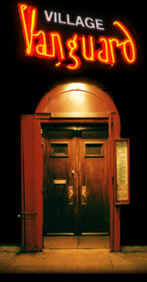 Whatever can be said about the business, most club owners aren’t
necessarily people who are in it because they love the music, as did Max
Gordon, the gentleman who opened and ran the Village Vanguard for many
years. Max, who passed away a number of years ago, dearly loved the music
and the musicians. He was at the club every night - a true fixture on
the New York Jazz scene. They don’t make ‘em like that anymore!
Whatever can be said about the business, most club owners aren’t
necessarily people who are in it because they love the music, as did Max
Gordon, the gentleman who opened and ran the Village Vanguard for many
years. Max, who passed away a number of years ago, dearly loved the music
and the musicians. He was at the club every night - a true fixture on
the New York Jazz scene. They don’t make ‘em like that anymore!
The business today isn’t about the music, but rather about how to make money from it. Being the entertainment center that New York is, tourists from around the world come here to enjoy the Arts. All kinds of music compete for their dollars, and the Jazz clubs want their share of the spoils. I don’t take issue with this fact - we all have to survive - but I do take issue with some of the practices they employ to satisfy their wants at the expense of the musicians. As most musicians will tell you - "the biz just sucks!"
The one thing that bothers me as much as anything is that many clubs no longer allow a group - one that might not be very well known in New York - the time or the opportunity to develop an audience in their venues. The "old way" of doing things was for club owners to work with artists and groups to develop a following in their clubs. Over a period of time this business practice paid off quite well. It might have taken an artist or group a few times around in a club to gather a large audience, but as the people came to know and enjoy those musicians, they looked forward to returning again and again to hear them. This practice gave a group or artist longevity in a particular club and provided audiences with a lasting opportunity to become familiar with the music these groups were presenting.
While working this way took an investment of time, money - and faith - it many times resulted in a significant payoff for the clubs’ owners. It also gave the artists a bit of a "home base" in New York where they could get high-profile exposure and excellent PR. It was a "win/win" situation for all concerned even though, in a number of instances, it was a gamble for the club owner. But that IS what business is all about, isn’t it?
Today you find a radically different picture. Many club owners refuse to take any chances with musicians and their groups, and are rarely willing to expend an effort to develop any kind of working relationship with them. The artist is expected to assume total responsibility; rarely do you find a club willing to share any of the risk. This is a very sad situation, particularly for some of the newer groups or lesser-known artists, because it places many clubs more or less off limits except for an off night or those times when or if the musician shows a willingness to "pay to play," a practice with which I strongly disagree. The "pay to play" syndrome is something I don’t remember occurring when I came to New York in 1966. It now seems to have been going on for a good while and exemplifies what I have been writing about.
If an artist or group is new or unknown, some clubs - even the larger clubs - will ask that the artist or group’s record company guarantee that the club will break even. If there is no record company to back the artist, then he will probably have to guarantee this himself. An example of this is something I was told recently by someone close to me about a young saxophonist approaching the booker or owner of a club about bringing his quintet into the club on an off night. The club agreed to pay the quintet five hundred dollars, but the musician had to guarantee the club attendance by thirty people for their performance - at twenty-five dollars a head, or a total of seven hundred and fifty dollars. If the artist didn’t draw those initial thirty people, the difference had to come out of his pocket. So, in essence, the leader of the quintet had to "pay to play." Sad! Disgusting!
Certain clubs will have the artists "play for the door," meaning that the club makes no real investment. The groups play for the admission alone; the club keeps all proceeds from sales of food and alcohol. But then, some owners even want a percentage of the door in addition to the food and drink receipts. In the end, the investment in the evening is all at the expense of the musicians.
Now here’s a fair proposal: I will work for the door and give a percentage of that money to the club owner IF the club owner will share that same percentage of the money brought in by food and drink. Now THAT would be a good deal! This way, both management and the musicians win.
But as I have already said, I don’t frequent many of the clubs. Since I am on the road a great deal, I tend to spend my spare time around home. That is, I don’t go clubbing as I did when I lived in Manhattan. The club business, like the Jazz recording business, has become all about the money, just like most other things in our country. I find this situation particularly troubling because, to some extent, this is supposed to be about the music.
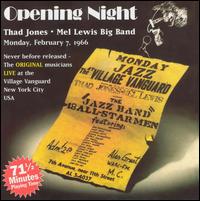 For the musicians, the whole point of performing IS the
music. In the earlier times of the Village Vanguard and the Half Note,
this is what it was all about. I knew Max Gordon from my six-and-a-half
years playing at the
Village Vanguard with the Thad Jones/Mel Lewis Jazz
Orchestra. I also knew
the Cantareno
family that owned the old Half Note down at Spring Street and Hudson
Avenue,
from playing there
with the Duke Pearson Big Band and sitting in with Al Cohn and Zoot Sims,
and others.
These club owners loved the music; it was as much part of their lives as
it was the
musicians’ lives. That is what "Art" is all about! Those were
wonderful times - a great deal of
camaraderie and a real feeling of community. I loved it and loved being
part of it.
For the musicians, the whole point of performing IS the
music. In the earlier times of the Village Vanguard and the Half Note,
this is what it was all about. I knew Max Gordon from my six-and-a-half
years playing at the
Village Vanguard with the Thad Jones/Mel Lewis Jazz
Orchestra. I also knew
the Cantareno
family that owned the old Half Note down at Spring Street and Hudson
Avenue,
from playing there
with the Duke Pearson Big Band and sitting in with Al Cohn and Zoot Sims,
and others.
These club owners loved the music; it was as much part of their lives as
it was the
musicians’ lives. That is what "Art" is all about! Those were
wonderful times - a great deal of
camaraderie and a real feeling of community. I loved it and loved being
part of it.
This joy of sharing the musical experience doesn’t seem to exist today. Or if it does, it is the exception rather than the norm. With rare exception, the New York situation is really not much different than in any other United States city. The shame of it all is that most of the people who own or manage these places come from a different place and time in the music business than Max Gordon and the Cantarenos. Nevertheless, and sadly, one must understand that today is today. Yesterday is gone. As they say, it’s a different world - and because of this, the club scene, today, rarely holds any attraction for me.





|
[EDITOR'S NOTE: (February 6, 2007) Ironically, last week, I called the booking agent for JAZZIZ at the Seminole Hard Rock Hotel and Casino complex in Hollywood, Florida. He told me that, when the club opened, in 2005, they booked jazz at the club, but now, they don't because "jazz doesn't sell. So, they prefer more exciting music and bands." I said they should change the name of the club, then. He said, it's the magazine that owns the club and they intend to keep their name. Oh, well, so much for honoring the name of "Jazz"! -- JC] |

February 8, 2007
Before reading Phil Wood's letter, you should know:
- The letter is over 3 years old.
- Bud Shank is 80
- The younger person they hired is John Clayton, not someone like Nora Jones
- John has been there for 3 years but Bud was already gone before John accepted the job and he and Bud have corresponded over the situation and are cool about it.
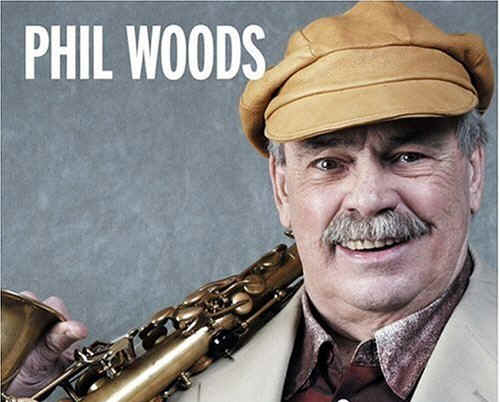 Hello Jazz lovers, wherever you are!
by Phil Woods
I presume you know that Bud Shank was fired from his post as founder and guiding light of the Bud Shank Workshop in Port Townsend, WA. He has been the 'man' there for 25 plus years, assembling one of the best teaching ensembles ever! But now they want a younger man with young ideas!
Outsourcing the wrong guy folks! It only takes forever to learn this music thing and even longer to come to terms with this jazz thing. And they want a younger guy. Any damn fool can play when they are 20 or 30 or 40, 50, 60. But try cutting the mustard when you are in your late 70's! Now anyone that can do that has acquired knowledge that no younger person can ever hope to learn.
 The jazz existence or any existence is not about getting somewhere. It is
all about the voyage. No one can ever master life, only experience it and
contribute something to making the world a better place to be an artist.
The jazz existence or any existence is not about getting somewhere. It is
all about the voyage. No one can ever master life, only experience it and
contribute something to making the world a better place to be an artist.
But, if you want to be a jazz musician, the requirements are more stringent. An awareness of world culture is a good place to start!
- Learn something about food and wine
- Learn a language
- Read a book
- Paint a painting
- See an O'Neill play
- Stare at a sunset
- Write a rondo
- For heaven's sake - be somebody!
And, no matter how long you do it, you will barely touch the surface of this passion called life, the jazz life!
You have to be a warrior. Bud Shank is a warrior, a tough one who has survived! What he has to teach is incalculable to measure. And they want a younger guy.
How about Norah Jones to teach jazz singing? Yeah! Right!
Bud and I have been doing many gigs together, Toronto festival, North Sea and others. We broached Concord Records to try and secure a one-shot record deal for Yoshi's in November. They said that instrumental music doesn't sell anymore! Imagine! A company founded on instrumental music, great music, decides that it doesn't sell anymore.
I am mad as hell and will continue to rant and rave about these things until my last breath. Culture in America is going to hell in a hand basket. (I love that saw - don't know what it means but love it still.) Keep the song alive. Until next time, stay well. And thank you for being a part of my thing!
Phil Woods
QUESTIONS:
- Does anyone have any idea how many musicians are in the World?
- Does anyone know how many record companies are in the World?
- Does anyone know how many of the musicians in the World are signed with the record companies in the World?
- Does anyone know how many musicians are produced independently?
- Does anyone know why?
- Does anyone know how much Michael Jackson gets per record sale?
- Does anyone know why Prince changed his name?
It takes a hell of a lot of effort and time to be a professional jazz musician. Practice and more practice. Writing new material. Wasting endless time in airport security lines and overbooked flights. Doing interviews. And, playing as much as we can. It is called earning a living. We have neither the time nor the resources to produce our own events. We need help from people in a position to help. Yes, we hear it every day: the world is changing, and not for the better. But are we the only ones left who care? -- Bud Shank
Websites:
Email: divajc47@yahoo.com
Videos:
Jazz musicians are always having to defend themselves. Oh well, at least
we don't have to have insurance for negligence like doctors do! Always
an upside to everything!
Scroll down at this link and read my response to Bigtiny.
World
Known Jazz vocalist Ms.Sandra Kaye Live at CJW Bund Center -
Jazzcorner's Speakeasy
THIS
IS WONDERFUL USE OF THE INTERNET
http://www.harlem.org/
October 15, 2006
Music: Work or Play?
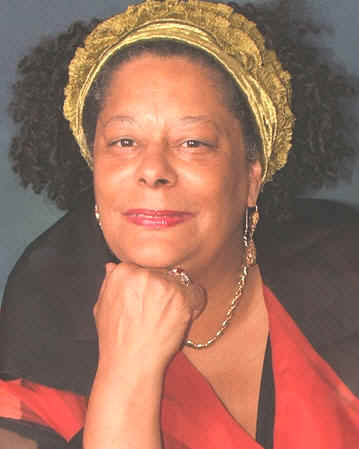
by Joan Cartwright
How many people realize that musicians begin their careers at four or five years old and continue until they die. Does the term "play" effect people's thinking about what musicians really do. Do they play music, meaning that they are not working?
In my 30-year career as a vocalist and songwriter, I've run into stone walls getting to the next level. I started singing at a theater in Jamaica, New York, at the age of four. By eight, I was a headliner of the annual Bernice Johnson Dance Recital. Mother doted on my Shirley Temple curls and my outfits of shiny tinsel and crinoline-lined, lacy dresses, not to mention the ballet, tap and interpretive costumes my parents paid for.
I studied piano with a woman whose name I've forgotten, but her stern face never encouraged me to learn. I was 27, when I found a man whose demeanor served as a catalyst for my growth as a vocalist, pianist and composer. My harp teacher, with whom I studied for two years, listened to my life stories as she showed me the difficulties of changing pedals and string fingering.
In the seventies, my formal education involved music, but I dueled my B.A. with Communications, a new department, separate from English. Television production fell under this banner, with radio, journalism, marketing and advertising. Marshall McLuhan's thesis, "The Medium is the Message", lead me to engage everything I did in getting out the message that I am a musician and I have something to say.
For the first 10 years of my career, I was getting paid to do what I love. But I was told that singing at benefits was good "for exposure". My singer friend and I decided that we'd get more exposure standing on a corner, taking our tops off than at all the benefits. Finally, I told people, "I can do it, but I can't ask my musicians to work for free." After all, I worked (or is that played) with grown men and women who had children to feed and bills to pay. Every doctor and lawyer has pro bono files in the cabinet, adding up to less than 10% of the case load. But, a musician, who plays for a living, is invited to perform at benefits at the ratio of 3 benefits to 1 gig. This had to stop and I was the only one who could stop it.
I traveled overseas, in 1990, to sing in Switzerland, where I was treated with dignity. Europeans don't see musicians as people who "play". Music is "work". So, I was paid well and given lots of respect. When I returned to the States, people treated me better than before I took the step across the big pond. I determined that musicians must leave the comfort of their homeland in order to be appreciated at home.
Now, 16 years later, I have completed a five-month tour of Asia, and people in Atlanta, who never thought of me as a professional before, seem to take me more seriously. In China, I worked at two clubs, where I didn't make as much money as in 1990. Musicians' pay always reduces, while the cost of living rises. That's ridiculous. People think musicians don't pay bills. After all, they spend their lives "playing" instead of "working" like other people.
Truth is, Music does the job that doctors and lawyers can't do. In one hour, musicians heal hundreds, if not thousands of people. The right song keeps a couple from divorcing or pushes them to see that they're not right for each other, saving thousands of dollars on legal deliberation. Music permeates the planet, bringing joy to all who hear it. People enjoy a concert more than they do the hospital or a law office. Yet, they pay doctors and lawyers extortionate fees and squint, when they get a high quote for a band of four or five adults to perform at a wedding or office party, where they will be enjoying themselves because of the music!
I'm befuddled at what people will pay for and what they want to get for free. Learning music is not free. You pay for lessons. You pay with your time to practice. You continue to learn more music. You must stay in front of the pack in order to be seen, heard and appreciated. Producing music is not free. Studio time is costly. Paying musicians to perform your music is expensive, even if they are your friends. Mixing and mastering is no joke. Duplicating CDs, producing videos and marketing it all runs into the thousands. But getting paid for a gig can be the hardest part of a musician's job.
Finally, unlike most professionals, there is little in the way of retirement or insurance funding for musicians, unless you belong to the union, which few musicians either can or will afford. They give joy to others throughout their lives and, unless they have a hit song or record, have little to fall back on in old age and just die destitute.
It's uncanny. What brings people the most pleasure, rarely ever sustains those who create it. But the beat goes on and, somehow, musicians find venues where they can "keep the music playing."
__________________________
Facebook message from Playthell
G. Benjamin to saxophonist Donald Harrison.
Let me say first of
all that I knew there was something strange between you and Wynton from
the minute that I first read your post. It made absolutely no
sense...so I knew there was some shit in the game that you were not coming
clean about. Now it has finally come out in your statements on this thread
about Wynton not promoting your career. I am very busy and am getting
behind in my work by taking so much time with this shit when I have
deadlines to meet. But the time I am spending here is well spent because
this is serious business!!!! You must understand
that I have been writing about the arts for a generation now, and I have
written for the finest mass publications in the English language: The
Guardian Observer, Sunday Times Of London, New York Daily News, Village
voice, etc. Plus I am the only radio producer in New York who present live
concerts on air by Jazz, Latin and Classical musicians. I have also played
in bands and been a bandleader too. So I know about the spats and long
term animosities that often exist between artists. And frankly I find this
thing with you and Wynton to be quite bizarre - although I am acutely
aware of the fact that I am hearing only one side of the story. Rest
assured that I shall seek out the other side! However in the mean
time and in between time, let me say what I think of your place in the
pantheon of jazz greats. I actually witnessed live performances of the
greatest artists on the alto Saxophone over the last hundred years, the
men who created and shaped the jazz vocabulary on your instrument. Bennie
Carter, Johnny Hodges, Russell Procope, Hank Crawford, Jackie McClean,
Cannonball Adderly, Lou Donalson, Eric Dolphy, Gary Bartz, James
Spaulding, Warm Daddy, et al. I knew Cannonbal,l and me and Jackie McClean
were good friends! (see my piece on Jackie @www.commentariesonthetimes.wordpress.com) I never saw Bird, but
I have listened to his music endlessly, and once delivered an innovative
theoretical paper on him commissioned by Jackie McClean. And I had a band
master in high school who was a monstrous Alto-Saxophonist that worshiped
Bird. Plus I hear Charlie Parker's musical innovations in the playing of
every serious Jazz artist in the world! No matter the instrument!!! Yours is an
instrument that is hard to play well, because one must sing with it.
Please know that I consider you to be right up in that pantheon of great
artist on the instrument. I can think of no one in this era with whom you
cannot hold your own! This is as much the era of Donald Harrison on the
alto-sax as anyone playing the instrument. And now that you mention it I
have never heard Wynton talk about you, although I am not around him most
of the time so I can't say who he talks about or how often. Yet while I can see
how that is annoying to you since you two went to high school together, I
must say that it is not true that Wynton does not promote other
musicians...he is the greatest promoter of other musicians in the
world!!!!!!! There is one persistent theme in all of the interviews that I
have done with leading young jazz virtuosi - no matter their instrument -
is that they were inspired and instructed by Wynton Marsalis when they
were young artist trying to master their axe. That is without
exception!!!!!!!!!!!!!!!!!! I could start naming
artist whom Wynton helped and literally be here all fucking day!!!!! I am
interviewing a classical trumpeter right now, who is also professor of
music, and he is pointing out to me that Wynton has had the same pervasive
influence among classical trumpeters! And he is compiling a list of the
principal trumpeters with major symphony orchestras who are Wynton
Marsails protégés!! So to say that Wynton
does not promote other musicians is a motherfucking lie!!!!!!!!! I don't
give a shit who says it...it is a goddam lie!!!!!! You get me my man? So
just stop this shit right now or I can promise you that I will write a
serious piece exposing just what a monstrous lie it is!!! And I will
expose whoever is saying this as a lying charlatan!!!! Let's see who the
people will believe! If you have no idea
what it's like when I turn my critical pen on someone...you better hurry
up and ask somebody. Better still just read the essays on my blog under
the section titled: "On right wing Pundits and Boloviators," or
the essays titled "On Black Pundits in White Media." I am not a
person whom you want to subject your half baked arguments to serious
critical scrutiny! I have given you fair warning; what happens after this
is up to you. I am through with this thread however. The next statement I
make on this question - if I find it nescissary to correct lies and
misinformation - will be in the form of a critical essay which I shall
publish. What is clear to me
is that your beef with Wynton is provoked by the fact that you don't feel
Wynton has promoted your career sufficiently. Well you may be right about
that...but say that if it's your argument. When you make the sort of
sweeping statements you are making here you are flying in the face of
easily proven facts, and I will expose you if you continue to spread this
misinformation!!! Although I don't
understand why you have not been a part of the extensive party of New
Orleans musician that Wynton surrounds himself with, all of those he has
worked with are great!!! So maybe he just likes their playing better than
he likes yours. Which is his prerogatives!!!!!! What you should do my man
is to state your beef with Wynton and leave it at that!!!! If you attempt to
tarnish the good work Wynton is doing by half truths or outright lies, I'm
going to be on yo ass like stink on shit!!! Believe it!!!!!!!! The great
work that Wynton Marsalis is doing is unprecedented in the history of
Jazz, and thus it's bigger than you!!!! And I for one will defend him to
the death!!!!!!!! The Struggle for
Enlightenment Continues Playthell George
Benjamin PS: Your approach to
history i.e. your criticism of Wynton for his characterization of Duke as
a womanizer, is so silly and inept it is embarrassing! It shows just how
woefully unread you are in the literature of Jazz. You want proof: read
"Sweet Man," a book written by one of Ellington's favorite
lusicists who spent a lot of tome with him!!! There is nothing that
Wynton says that has not been extensively documented by evidence which is
acceptable to professional historians - as a former professor of history
and journalism I feel far better qualified to make that determination than
you!!! A word of advice Donald: Stick to making music and leave historical
criticism to the pros!!!!! And by the way, what Wynton says about Duke is
also true of him. I love Wynton as if he were my blood brother, and my
respect for his work knows no bounds - but I don't want him anywhere near
my daughter!!!!!!!!!