
#70 

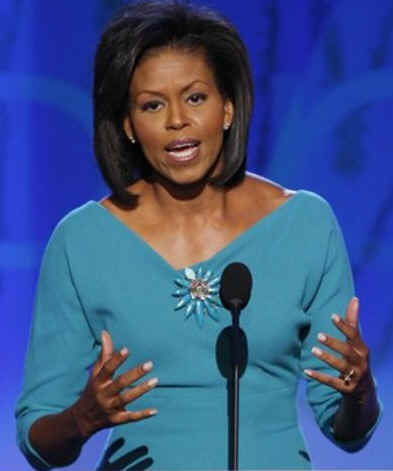
Such unnecessary and anxious contingency planning--if real--reflects a stereotype about most black women that stands in stark contrast to our position, experience and abilities.
Among those running the convention's primary administrative committees -- credentials, platform and rules--almost two-thirds are black women. Sixty-five percent of the central Democratic National Committee's membership are black women. The vice chairs of both the DNC and of the convention in Denver -- former Arkansas mayor Lottie Shackelford and Atlanta Mayor Shirley Franklin respectively -- also are black women. -- Yvonne Scruggs-Leftwich [Source]
What is on the Back of the Two Dollar Bill?
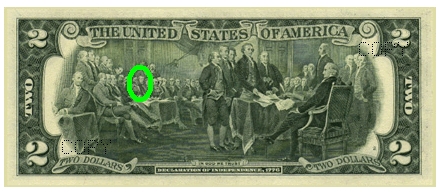
The back of the $2 bill has an engraving of the signing of the Declaration of Independence. In the image is a man who has dark skin and wearing a powdered wig while sitting at the table just to the left of the men standing in the center of the engraving. This dark skinned man is John Hanson in his position as president of the continental congress.
In the original painting hanging in the U.S. Capitol Rotunda, the dark skinned man does not appear!!!
A "Black" Man, A Moor, John Hanson was the First President of the United States! 1781-1782 A.D. George Washington was really the 8th President of the United States!
First President of the U.S.
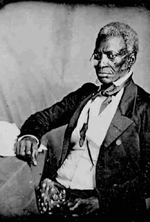
JOHN HANSON
(1781-1782 A.D.)
George Washington was not the first President of the United States. In fact, the first President of the United States was one John Hanson. Don't go checking the encyclopedia for this guy's name - he is one of those great men that are lost to history. If you're extremely lucky, you may actually find a brief mention of his name.
The new country was actually formed on March 1, 1781 with the adoption of The Articles of Confederation. This document was actually proposed on June 11, 1776, but not agreed upon by Congress until November 15, 1777. Maryland refused to sign this document until Virginia and New York ceded their western lands (Maryland was afraid that these states would gain too much power in the new government from such large amounts of land).
Once the signing took place in 1781, a President was needed to run the country. John Hanson was chosen unanimously by Congress (which included George Washington). In fact, all the other potential candidates refused to run against him, as he was a major player in the revolution and an extremely influential member of Congress.
As the first President, Hanson had quite the shoes to fill. No one had ever been President and the role was poorly defined. His actions in office would set precedent for all future Presidents. He took office just as the Revolutionary War ended. Almost immediately, the troops demanded to be paid. As would be expected after any long war, there were no funds to meet the salaries. As a result, the soldiers threatened to overthrow the new government and put Washington on the throne as a monarch.
All the members of Congress ran for their lives, leaving Hanson as the only guy left running the government. He somehow managed to calm the troops down and hold the country together. If he had failed, the government would have fallen almost immediately and everyone would have been bowing to King Washington. In fact, Hanson sent 800 pounds of sterling silver by his brother Samuel Hanson to George Washington to provide the troops with shoes.
Hanson, as President, ordered all foreign troops off American soil, as well as the removal of all foreign flags. This was quite the feat, considering the fact that so many European countries had a stake in the United States since the days following Columbus. Hanson established the Great Seal of the United States, which all Presidents have since been required to use on all official documents. President Hanson also established the first Treasury Department, the first Secretary of War, and the first Foreign Affairs Department. Lastly, he declared that the fourth Thursday of every November was to be Thanksgiving Day, which is still true today.
The Articles of Confederation only allowed a President to serve a one year term during any three year period, so Hanson actually accomplished quite a bit in such little time.
Six other presidents were elected after him - Elias Boudinot (1783), Thomas Mifflin (1784), Richard Henry Lee (1785), Nathan Gorman (1786), Arthur St. Clair (1787), and Cyrus Griffin (1788) - all prior to Washington taking office.
So what happened?
Why don't we ever hear about the first seven Presidents of the United States?
It's quite simple - The Articles of Confederation didn't work well. The individual states had too much power and nothing could be agreed upon. A new doctrine needed to be written - something we know as the Constitution. And that leads us to the end of our story.
George Washington was definitely not the first President of the United States. He was the first President of the United States under the Constitution we follow, today.
And the first seven Presidents are forgotten in history.
* * * * *
* * * * *
WATCH THIS VIDEO FOR THE TRUTH ABOUT RELIGION

* * * * *
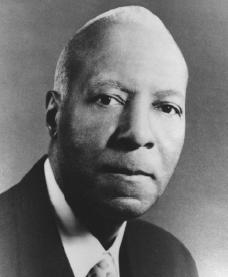
"...in
these times of storm and stress, this program will be opposed. Our
Movement, therefore, must be well knit together. It must have
moral and spiritual vision, understanding, and wisdom."
-- A.
Philip Randolph
The
March on Washington Movement
1942
was led by
A.
Philip Randolph, International President of the Brotherhood of
Sleeping Car Porters, A. F. of L. Click the link above for excerpts from
keynote address to the Policy Conference of the March on Washington
Movement, meeting in Detroit, Michigan, September 26, 1942.
November 4, 2008
YES WE DID!
[Monday, March 22, 2010]
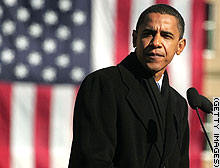
January 21, 2011
RESPECT
AND FAIR PLAY DESERVE A SINGLE STANDARD
By
Helen L. Burleson, Doctor of Public Administration
The right-wing is crying foul because President Obama did not “scold” his guest, President Hu Jintao of China for the country not allowing Lui Xiaobo, the Chinese Nobel Laureate, to go to Norway to receive his prize. How quickly they forget the hue and cry and outrage advanced by the right that President Obama did not deserve the Nobel Peace Prize bestowed upon him during the first year of his presidency because “they” did not feel that he had done enough. This is disingenuous. We have no right to castigate or criticize China for anything when we don’t respect the current President of the United States of America.
How would they like it if China pointed a finger at the United States when Arizona State University invited President Obama to be the commencement speaker and did not feel that he had done enough to be awarded an honorary degree? Previously that same university awarded honorary degrees to entertainers with checkered pasts and others of lesser standing and accomplishments?
How would “they” like it if President Hu Jintao asked them why they demeaned American health care reform by calling it “Obamacare” when it is an attempt to be in step with the rest of the industrialized world by providing affordable, quality health care for all of its citizens? How would they like it if President Hu Jintao asked why a member of Congress rudely called out “You lie” while the President of the United States of America was giving his first State of the Union Address?
During the press briefing with both President Obama and President Hu Jintao, an American reporter had the audacity to ask why Majority Leader Boehner turned down an invitation to attend the State Dinner given in honor of President Hu Jintao. Didn’t they realize that that was not an embarrassment to President Obama or President Hu Jintao, but a very demonstrable image of the ignorance of Speaker Boehner? Lacking in leadership and statesmanship, Boehner proved to be an embarrassment to himself and to the Republican Party. Intelligence and leadership makes one rise above the fray of petty politics. What gripe or grievance could Speaker Boehner have with President Hu Jintao of China to cause him to refuse an invitation to attend a State Dinner given in honor of the president of a country upon which we rely so heavily for financial and other reasons? When Boehner is not crying he is shouting, “Hell no.” He is always disrespectful of the President of the United States. If Boehner were in China, he would be severely punished for showing disrespect for the president and the presidency.
When we don’t give or guarantee equal rights for all our citizens, how can we justify being so inflamed over human rights violations in China? Do we ever step back and take a look at our own culture of crudity, violence, disdain, disrespect and exclusion of our own citizens? Where do we have the right to criticize that which we are guilty of ourselves? Shouldn’t there be one standard for behavior and conduct? Why are there more Blacks in prison than whites? Why is the penalty for using crack cocaine and powdered cocaine different for Blacks and whites? Blacks using crack cocaine are given a longer prison sentence than whites are given for using powdered cocaine. Why is unemployment doubled or tripled in the Black community as opposed to employment in the white community? Why do we deny equal rights to the LGBT community? Why, until President Obama signed the Lilly Ledbetter Bill for equal pay for women for equal work, did we pay men more for the same work? Why are inner-city schools less well funded and less well equipped than the schools in the white neighborhoods? Chinese students excel in education and outperform ALL American students which is an indication that China is doing something right. Why do we have to borrow so much money from China when we used to be the highest producers of goods and services in the world? China is not responsible for our outsourcing of jobs! China is the beneficiary of the greed and corruption of American millionaire and billionaire owners of companies that have sent their work overseas to exploit the American worker by denying them jobs; and, simultaneously exploiting the Chinese workers by not paying them the union wages that American workers are paid.
In short, all these nut cases who are so hypercritical of China should remedy the inequities right here at home. There should be one universal standard for respect and fair play.
womensenews.org/article.cfm/dyn/aid/3721
Dear Larry Yates:
You are among the group of "we are the ones we have been waiting for." This is a major statement made just as needed by the right person for the right people. I hope that many of those receiving this message will forward it widely. I hope those who receive it will include those women who have separated themselves from the masses of women of color during these times. Where there is understanding, communication and openness to risks, even if uncomfortable, healing can take place. This is an extremely important message and should also be repeatedly sent to members of the DNC and others in positions of power related to the election. I look forward to others following your lead. I have hope. -- SB
**************************************
Larry Yates
grassroots4obama@yahoogroups.com
To: White Progressives
It is important for us to realize that as whites, we have been
miseducated to be wary -- almost paranoid -- of black leadership. As
a result, we frequently fail to grasp who our real friends are, and
how much we owe them. Overwhelmed by the media's magnifying lens
view of their flaws, we fail to stand up for them in the way that we
should stand up for any ally - perhaps with criticism, but also with
solidarity. And with a recognition of the agenda behind the attacks.
This is a very practical problem, especially this year.
This piece is not about Barack Obama. But it is predictable that
Obama, if he is nominated by the Democrats, will experience attacks
(and not just from Republicans) that have racial inflections. He
will be accused, perhaps with vaguely plausible evidence, of actions
related to black male stereotypes. Are you ready to see past those
attacks, and to speak up, quickly enough to make a difference? Or
will this fresh talented moderate politician, with real potential to
pull together an effective coalition for positive change, be
destroyed the same old way?
Right now, Obama must choose between his own interests and Rev.
Wright, as an individual politician. That's his situation.
But his situation -- and a lot more -- depends to some extent on how
much we allow ourselves again to be jerked around again by our
prejudices. In fact, Obama is in the situation he is because white
liberals and progressives didn't get what was going on and defend
Rev. Wright. He could not defend his minister and mentor unless
there were powerful white voices also doing so. And there were not.
This is not to say that Obama agrees fully with Wright. I have no
idea how much they agree. But the decision to separate himself from
Wright was a political decision.
We live in a country where 98% of formal leaders are white, and
African-American leaders in the media limelight are either
hand-picked (as "good" or as "bad") or are the
few tough enough and hungry enough to stay in the limelight. Even
locally, we may not see grassroots African-American leadership at a
particular moment. So it is very easy to forget how much every
social justice movement, even every civic and neighborhood group,
owes to African-American leadership.
All of us have benefited from the expanded democracy in this country
since the 1950s. I'm not talking about electoral democracy, of
course. There, we aren't doing so well. I'm talking about the
increased comfort that most of us have with organizing and raising
Cain when something goes wrong, from local plans to put in a
landfill to gender discrimination in the workplace to an illegal
war. This grassroots democracy, despite constant corporate pressure
to restrict it, has had important impacts, from halting the nuclear
industry for decades to enabling the fastest-growing antiwar
movement in U.S. history to radically changing the position of
battered women and developmentally disabled people.
In this country with no historical awareness, we tend to think of
this as just "how we are."
But in the 1950s, most people in the USA had been cowed into making
almost no protests. McCarthyism and complacency had almost
completely stifled movements, like the labor movement, that had
shaken the nation in the 1930s. From the movie studios to the
schoolhouse, the atmosphere of fear was pervasive. As for movements
of feminists, of gay people, or for the environment or against war,
their members were numbered in the hundreds nationally. There were
no local defenders of battered women, disabled people were as much
in the closet as gays, and children were being indoctrinated for
survivable nuclear war in our segregated and sexist schools. I have
talked to older white activists who described the period in much the
same terms that people talk of living under Franco or Stalin.
Very few of us whites fully grasp that it was working-class southern
African-Americans that blazed the trail from that to increased
democracy -- the trail that the rest of us have followed. There is a
reason that the Rev. Martin Luther King Jr. is the only US
clergyperson known to all of us, and known globally. It's not
because he was personally a saint -- he wasn't. It's because he came
to be a symbol of the most powerful justice movement of our time,
certainly in the US, and perhaps internationally. That civil rights
movement, along with its sister movement, anti-colonial revolt, shook
not only Jim Crow, but all systems of unjust power, in ways that are
still felt.
Yet even after that great historical lesson, too many white liberals
and progressives have been willing to stand by while the leaders who
stood up for their issues were attacked -- if those leaders happened
to be African-American, and if they were less than perfect. (Which
all leaders are.)
See if you can recognize this man. He risked his life working at the
grassroots in the South for civil rights in his youth, facing as
much risk as any GI in Vietnam. He then came to an urban area
farther north, where he pressed successfully for expanded voting
rights locally, and helped build effective community service
organizations. He was among the first big city mayor to support gay
and lesbian rights. He was pursued aggressively by federal law
enforcement, which was however unable to find any financial or
ethical wrongdoing. He was finally disgraced and arrested for a
personal substance abuse problem, compounded by adultery -- a set of
problems he shared with many other middle-aged male politicians. To
most whites, he became a contemptible laughingstock.
Or this one. He is a minister in perhaps the USA's most liberal
Christian denomination, which is mostly white. His church is one of
the largest in the denomination, is racially integrated, and
provides a wide range of services to people in the inner city. He
served honorably in the US military. Though he has a large
African-American following, and could have his own independent
church, he has stuck with his denomination, including with its
strong stance of welcoming gays and lesbians. Recently, for reasons
having nothing to do with him personally, he has experienced a
McCarthy style attack based on comments from his sermons taken out
of context. Millions of whites have accepted the themes of the
attack uncritically.
Martin Luther King, Marion Barry and Jeremiah Wright are/were not
perfect human beings. But they were in the front lines of work that
most white liberals and progressives claim to support -- not just
for African-Americans, but for all of us. They clearly went beyond
"black issues," when they did not have to, while
maintaining mass African-American support. In fact, each faced
criticism by more nationalist African-Americans for doing so, for
working too closely with whites, for taking on issues like the
Vietnam war and gay and lesbian rights.
Did we stand by them in their time of need?
Did we grasp that their personal failings were just an excuse, that
the reason for the attacks was their role in the movement for
justice? (Was Marion Barry the only adulterous substance abusing big
city mayor? Is Rev. Wright the only preacher that damns America or
believes 2 or 3 things you don't agree with?)
Were we willing to forgive them for the occasional error to the
degree we would forgive a Ted Kennedy or an Al Gore, people who have
been near the center of power their whole lives and really have done
and risked so little? Were we willing to point out the hypocrisy of
the attackers, who were real purveyors of addiction, real merchants
of hate?
Did we defend them as we did Bill Clinton, who was unfairly attacked
by the right wing, but who had himself buckled to the right wing by
ending welfare, bombing Iraq, and standing idly by while Big Finance
ramped up its ravaging of working people?
Those who attacked King and Barry and Wright, the J. Edgar Hoovers
and Karl Roves and Fox News, knew exactly what they were doing.
Every leader has flaws, but whites will automatically tend to
magnify those of African-American leaders. Made nervous about those
flaws, we tend not to defend them. Failing to defend them, we weaken
our coalition and strengthen the coalition of racism, corporate
power, and ignorance.
The attackers seek to restore the cynicism and intimidation of the
1950s. We must repair our blind spot towards African American
leadership, or the attackers will succeed again next time.
We whites will never totally lose that feeling of knowing better,
the unconscious sense of being superior as a white person, of being
the center of the rational universe. But we must work hard to
overcome its impact on our behavior. It is self-destructive to fail
to recognize your own allies and defend them (with reservations if
necessary). When King's support flagged and he was killed, Bobby
Kennedy was next. When Marion Barry was successfully disgraced, Bill
Clinton was next. The words of German pastor Niemoller are a moral
lesson, but they are also a very practical one.
First
they came for the communists, and I did not speak out --
because I was not a communist;
African-Americans have been speaking out for themselves, but also
for your basic values, for centuries. Let's hear some loud white
voices -- right away -- against the next smear campaign of an
African- American leader for social justice. You don't have to like
him or her; you just have to understand Niemoller's lesson. By the
time you find someone nice enough for you to feel comfortable
defending, the battle will be over. The next time they come for a
Rev. Wright, don't wait to speak out.
Larry Yates
From: One of Them
Please pass this on to whoever might benefit.
These are my personal opinions, not those of any organization I am
part of.
Then they came for the socialists, and I did not speak out --
because I was not a socialist;
Then they came for the trade unionists, and I did not speak out --
because I was not a trade unionist;
Then they came for the Jews, and I did not speak out --
because I was not a Jew;
Then they came for me --
and there was no one left to speak out for me.
"Yeah, but what has he done?"

PLUS He. . .
1.Ordered all federal agencies to undertake a study and make
recommendations
for ways to cut spending.
2. Ordered a review of all federal operations to identify and
cut wasteful
spending and practices.
3. Instituted enforcements for equal pay for women
4. Beginning the withdrawal of US troops from Iraq
5. Families of fallen soldiers have expenses covered to be on
hand when the
body arrives at Dover A.F.B.
6. Ended media blackout on war casualties; reporting full
information.
7. Ended media blackout on covering the return of fallen
soldiers to Dover A.F.B.; the media is now permitted to do so pending adherence to
respectful
rules and approval of fallen soldier's family.
8. The White House and federal government are respecting the
Freedom of
Information Act.
9. Instructed all federal agencies to promote openness and
transparency as
much as possible.
10. Limits on lobbyist's access to the White House
11. Limits on White House aides working for lobbyists after
their tenure in
the administration.
12. Ended the previous stop-loss policy that kept soldiers in
Iraq/Afghanistan longer than their enlistment date.
13. Phasing out the expensive F-22 war plane and other outdated
weapons
systems, which weren't even used or needed in Iraq/Afghanistan.
14. Removed restrictions on embryonic stem-cell research.
15. Federal support for stem-cell and new biomedical research.
16. New federal funding for science and research labs
17. States are permitted to enact federal fuel efficiency
standards above
federal standards.
18. Increased infrastructure spending (roads, bridges, power
plants) after
years of neglect.
19. Funds for high-speed, broadband Internet access to K-12
schools.
20. New funds for school construction.
21. The prison at Guantanamo Bay is being phased out
22. US Auto industry rescue plan
23. Housing rescue plan
24. $789 billion economic stimulus plan
25. The public can meet with federal housing insurers to
refinance (the new
plan can be completed in one day) a mortgage if they are having
trouble
paying.
26. US financial and banking rescue plan
27. The secret detention facilities in Eastern Europe and
elsewhere are
being closed
28. Ended the previous policy; the US now has a no torture
policy and is in
compliance with the Geneva Convention standards
29. Better body armor is now being provided to our troops
30.The missile defense program is being cut by $1.4 billion in
2010
31. Restarted the nuclear non-proliferation talks and building
back up the
nuclear inspection infrastructure/ protocols
32. Re-engaged in the treaties/agreements to protect the
Antarctic
33. Re-engaged in the agreements/talks on global warming and
greenhouse gas
emissions
34. Visited more countries and met with more world leaders than
any
president in his first six months in office
35. Successful release of US captain held by Somali pirates;
authorized the
SEALS to do their job
36. US Navy increasing patrols off Somali coast
37. Attractive tax write-offs for those who buy hybrid
automobiles
38. Cash for clunkers program offers vouchers to trade in fuel
inefficient,
polluting old cars for new cars; stimulated auto sales
39. Announced plans to purchase fuel efficient American-made
fleet for the
federal government
40. Expanded the SCHIP program to cover health care for 4
million more
children
41. Signed national service legislation; expanded national youth
service
program
42. Instituted a new policy on Cuba , allowing Cuban families to
return home
to visit loved ones
43. Ended the previous policy of not regulating and labeling
carbon dioxide
emissions
44. Expanding vaccination programs
45. Immediate and efficient response to the floods in North
Dakota and other
natural disasters
46. Closed offshore tax safe havens
47. Negotiated deal with Swiss banks to permit US government to
gain access
to records of tax evaders and criminals
48. Ended the previous policy of offering tax benefits to
corporations who
outsource American jobs; the new policy is to promote
in-sourcing to bring
jobs back
49. Ended the previous practice of protecting credit card
companies; in
place of it are new consumer protections from credit card
industry's
predatory practices
50. Energy producing plants must begin preparing to produce 15%
of their
energy from renewable sources
51. Lower drug costs for seniors
52. Ended the previous practice of forbidding Medicare from
negotiating with
drug manufacturers for cheaper drugs; the federal government is
now
realizing hundreds of millions in savings
53. Increasing pay and benefits for military personnel
54. Improved housing for military personnel
55. Initiating a new policy to promote federal hiring of
military spouses
56. Improved conditions at Walter Reed Military Hospital and
other military
hospitals
57. Increasing student loans
58. Increasing opportunities in AmeriCorps program
59. Sent envoys to Middle East and other parts of the world that
had been
neglected for years; re-engaging in multilateral and bilateral
talks and
diplomacy
60. Established a new cyber security office
61. Beginning the process of reforming and restructuring the
military 20
years after the Cold War to a more modern fighting force; this
includes new
procurement policies, increasing size of military, new
technology and cyber
units and operations, etc.
62. Ended previous policy of awarding no-bid defense contracts
63. Ordered a review of hurricane and natural disaster
preparedness
64. Established a National Performance Officer charged with
saving the
federal government money and making federal operations more
efficient
65. Students struggling to make college loan payments can have
their loans
refinanced
66. Improving benefits for veterans
67. Many more press conferences and town halls and much more
media access
than previous administration
68. Instituted a new focus on mortgage fraud
69. The FDA is now regulating tobacco
70. Ended previous policy of cutting the FDA and circumventing
FDA rules
71. Ended previous practice of having White House aides rewrite
scientific
and environmental rules, regulations, and reports
72. Authorized discussions with North Korea and private mission
by Pres.
Bill Clinton to secure the release of two Americans held in
prisons
73. Authorized discussions with Myanmar and mission by Sen. Jim
Web to
secure the release of an American held captive
74. Making more loans available to small businesses
75. Established independent commission to make recommendations
on slowing
the costs of Medicare
76. Appointment of first Latina to the Supreme Court (Justice
Sonia Sotomayor)
77. Authorized construction/ opening of additional health
centers to care for
veterans
78. Limited salaries of senior White House aides; cut to
$100,000
79. Renewed loan guarantees for Israel
80. Changed the failing/status quo military command in
Afghanistan
81. Deployed additional troops to Afghanistan
82. New Afghan War policy that limits aerial bombing and
prioritizes aid,
development of infrastructure, diplomacy, and good government
practices by
Afghans
83. Announced the long-term development of a national energy
grid with
renewable sources and cleaner, efficient energy production
84. Returned money authorized for refurbishment of White House
offices and
private living quarters
85. Paid for redecoration of White House living quarters out of
his own
pocket
86. Held first Seder in White House
87. Attempting to reform the nation's healthcare system which is
the most
expensive in the world yet leaves almost 50 million without
health insurance
and millions more under insured
88. Has put the ball in play for comprehensive immigration
reform
89. Has announced his intention to push for energy reform
90. Has announced his intention to push for education reform
Oh, and he built a swing set for the girls outside the Oval
Office!
Robert P. Watson, Ph.D. Coordinator of American Studies
Lynn University
91. Signed the Lilly Ledbetter fair pay act.
92. Discovery and publicizing of Medicare fraud, making the
public more
aware of not turning a blind eye to such fraud.
Elected by a landslide!
Electoral votes: Obama - 338 McCain - 141 |
|
 |
Barack Obama is the
projected winner. |
September 30, 2008 - Bailing Out!
September 16, 2008
U.S. To Declare October ‘Economic Emergency’, Suspend Elections
By Sorcha Faal, and as reported to her Western Subscribers (Traducción al Español abajo)
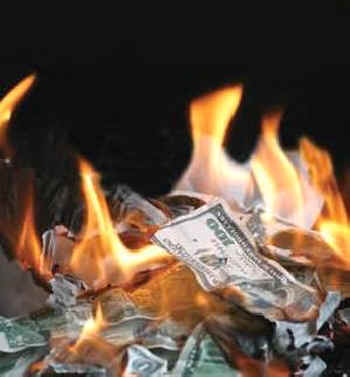
The Federal Security Service of the Russian Federation (FSB) is reporting in the Kremlin today that the Bank of England has received from the United States Federal Reserve Bank a ‘notice’ that President Bush is preparing to declare an ‘Economic Emergency’ during the week of October 5th and will further announce that the American Presidential election due to be held on November 4th will be ‘indefinitely suspended’.
These reports state that the Governor of the Bank of England, Mervyn King, had expressed his ‘shock and outrage’ to his American counterparts at the US Federal Reserve, after the catastrophic collapse of one of the largest financial banks in the World, Lehman Brothers, which caused both the Bank of England and the European Central Bank to rush $42 billion into the European economy yesterday to keep it from collapsing, and their own banks from running out of money, necessitating the response from the US Central Bank leader Ben S. Bernanke.
As Prime Minister Putin had previously warned, and as we had reported in our September 13th report “Hurricane Ike To Completely Destroy United States, Says Putin”, the horrific hurricane storm that has devastated the State of Texas, and where a humanitarian crisis is presently unfolding, has, indeed, proved to be the proverbial ‘straw that broke the camels back’ as the catastrophic damage from this storm raced beyond the Gulf of Mexico coast and ravaged the heartland of America to such an extent that the Governors of Ohio and Kentucky have declared States of Emergency as millions have been left without power.
The significance of this historic storm damage to the American economy, these reports say, led to the unprecedented pressures put upon the World’s largest insurance company American International Group (AIG) and its halt in negotiations, during a rare Sunday meeting in New York, to support the near bankrupt Lehman Brothers on Sunday, but which was then allowed to collapse and is now threatening to also destroy AIG itself.
Not being explained to the American people is that AIG, the World’s largest player in the $45 Trillion derivatives market, during the past two weeks had bet heavily on the World Markets against the damage from Hurricane Ike exceeding $2 billion in property damage, lost oil and gasoline production, lost wages and payments to companies forced to close, etc., it is obligated to pay, but which the actual damages are now being estimated will exceed $1 Trillion as the damages throughout the United States are finally tallied.
Such a calamitous action by AIG has basically shattered the Western economic system, and as we can read as reported by The Australian Business News Service in their article titled “ Global banks brace for derivative blow-up”, and which says:
“So here we are on the morning of D Day. The world's major counterparties on the $US455 trillion derivatives market go into technical default and no one is sure what is going to happen.
Lehman Bros yesterday formally petitioned the State Bankruptcy Court of the Southern District Court of New York for Chapter 11 protection.
Lehman would also have filed what are called "first day motions", which allow the bank to pay salaries and wages, while it continues to market its non-toxic, broker-dealer operations and work out what on earth to do with its highly toxic $US53 billion residential and commercial mortgage portfolio.
But, as scary and Spartan as it might sound, failure is as essential to the workings of an effective marketplace as is success.
Which means only that, given this shattered, battle-weary investment bank is unable to find itself a new owner or think its own way through the current calamitous circumstances, then one of the legendary brands of Wall Street should be left to fail.
In a weekend of unprecedented drama, the Fed seems to have been forced to play Solomon and choose between Merrill Lynch and Lehman. Both were facing mortal threat. But it seems only one could survive intact.”
Even worse for the American people during this unprecedented crisis is that one of their top economic experts, Wilbur Ross, chairman and CEO of WL Ross & Co, is now warning that over 1,000 US banks are nearing collapse, and one of their top economists, Nouriel Roubini, of NYU's Stern School and RGE Monitor, is further warning that “there is already a "slow-motion run on retail banks" occurring nationwide.”
Russian Military Analysts commenting on these reports state that though it is unlikely that the American President can suspend US elections solely on the basis of an Economic Emergency alone, it is entirely probable that he could do so should their Nation suffer another 9/11 type attack, and which they ‘cryptically’ observe could place as early as September 22nd as American Military Forces begin to conduct their World-Wide tests of their new nuclear alert system as they conduct another test of their so-called Star Wars Missile Defense System.
It should be further noted that as their once great Nation continues sliding towards the abyss of total ruin, these American people still refuse to acknowledge the substance of the many warnings being issued to them from all corners of the World as if even with eyes and ears they do not see and do not hear anything other than what they are programmed for by their masters.
How sad for these people, how much sadder for the rest of us these people are now all but lost.
© September 16, 2008
EU and US all rights reserved.
[Ed. Note: The United States government actively seeks to find, and silence, any and all opinions about the United States except those coming from authorized government and/or affiliated sources, of which we are not one. No interviews are granted and very little personal information is given about our contributors, or their sources, to protect their safety.]
Translation to Spanish by: Sister Maru Barraza, Mazatlán, Mexico