 #59
#59

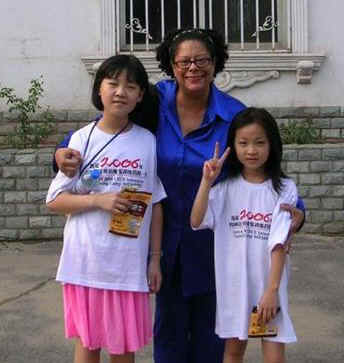
The five months I spent in China in 2006, opened my eyes to a lot about human nature. In the department stores, I was shocked to find skin-lightening products on every cosmetic counter. The harm that the European has done to other cultures may be irreversible. ~ Diva JC
AFRICAN PRESENCE IN CHINA AND THE WORLD
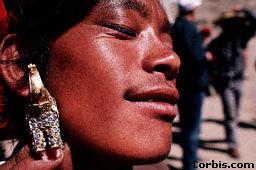
The African role in early Asian civilization has been submerged and distorted for centuries. Asia's African roots are well summarized in "African Presence in Early Asia" by Ivan Van Sertima and Runoko Rashidi, and "African Presence in Early China" by James Brunson. The original oriental people were Black and many of them still are Black - in southern China and Asia. Read more. . .
There were Blacks in ancient China. The skeletal remains from southern China are predominately Negroid. The people practiced single burials which is an African ritual. In northern China the blacks founded many civilizations. The three major empires of China were the Xia Dynasty (c.2205-1766 B.C), Shang/ Yin Dynasty (c.1700-1050 B.C) and the Zhou Dynasty. Read more. . .
Links:
- http://www.blackherbals.com/african_roots_of_traditional_chinese_med.htm
- http://www.blackindians.com
- http://www.rosecity.net/cherokee/blackindians.html
- http://www.africanamericans.com/BlackIndians.htm
- http://www.blackindians.com/new_page_7.htm
- http://members.tripod.com/pointingbird/lostfeatherintl/id58.htm
- http://www.raceandhistory.com/cgi-bin/forum/webbbs_config.pl/noframes/read/2054
Tribe Votes on Freed Slaves' Membership
By MURRAY EVANS (Associated Press Writer)
March 3, 2007 5:27 PM EST
TAHLEQUAH, Okla. - Cherokee Nation citizenship was at stake Saturday in an election to determine whether descendants of people the Cherokee once owned as slaves should be counted as members of the tribe.
An estimated 45,000 Cherokee were registered to vote in the election, with 30 polling places opened across northeastern Oklahoma. Polls close at 7p.m.
The election resulted from a petition drive aimed at limiting citizenship to descendants of "by blood" tribe members as listed on the federal Dawes Commission's rolls from more than 100 years ago.
That commission, set up by a Congress bent on breaking up Indians' collective lands and parceling them out to tribal citizens, drew up two rolls, one listing Cherokees by blood and the other listing freedmen, a roll of blacks regardless of whether they had Indian blood.
A "yes" vote on the amendment would remove descendants of freed slaves - estimated to be about 2,800 - from the tribe's membership. A "no" vote would allow them to remain tribal citizens.
Some opponents of the ballot question argued that attempts to remove freedmen from the tribe were motivated by racism.
"I think there are some people associated with this (ballot measure) who continue with the falsehood that freedmen were forced upon the tribe and do not have Indian ancestry," said Marilyn Vann, president of the Oklahoma City-based Descendants of Freedmen of Five Civilized Tribes. "They make it sound like the tribe will be doomed if these people aren't cast out. They're taking away the rights of people."
Tribal officials said the vote was a matter of self-determination.
"The importance of the vote today is that it gives the Cherokee people the opportunity to decide the citizenship of their nation," tribal spokesman Mike Miller said. "There's rhetoric on both sides of the issue, but it's important that the Cherokee people themselves decide."
The petition drive followed a March 2006 ruling by the Cherokee Nation Supreme Court that said an 1866 treaty assured freedmen descendants of tribal citizenship. Since then, more than 2,000 freedmen descendants have enrolled as citizens of the tribe.
Court challenges by freedmen descendants seeking to stop the election were denied, but a federal judge left open the possibility that the case could be refiled if Cherokees voted to lift their membership rights.
Copyright 2007 The Associated Press. All rights reserved. This material may not be published, broadcast, rewritten or redistributed.
***********************************************
Response from Dinizulu Gene Tinnie and Sam Anderson
Hey Joan, and Sam,
I received this article just about simultaneously from both of you, and thanks for sending it. Sam, you gave it the right subject title when you labeled it as news "On the racism front" (along with the other article on prisons), and Joan, you put in the reminder that "common sense ain't common" by going back to the much too sensible observation that ALL people originate from Africa, so this Cherokee exclusion is pretty frivolous, to put it mildly.
This article seems to be me to be symptomatic of... what can it be called, the 9/11 factor?, you know, the deal where the news media reports "news" but there is so much more left out than what is put in that you really have to wonder what the real story is, and if we will ever really know. I was glad to see that they did make reference to the very similar case with the Seminole Nation back in 2,000. (Sam, you remember meeting
Mrs. Finney, the chairperson of one of the two Black Bands of that Nation, and hearing about the madness as it was just beginning to brew.) No one was really surprised that the Federal government threw out the so-called election to exclude the Black Bands, called Freedmen, of the Seminoles because the whole process was so obviously bogus. I have a feeling that the case here will not be much different. But, of course, the real issue is not one for the Federal government. As we all know only too well, they are the cause of the problem in the first place, so there is an awful lot of irony in them being called upon to do the right thing now.
Whatever happens legally and through the courts, it seems to me that there are too many real issues that are not being brought to the forefront. I am no expert on this part of history, but I have met members of these Nations and activists who have been involved and historians who have looked at the issues, so, while I can't pretend to know any answers I can claim to know of a few of the questions that need to be brought up and seem to be conveniently omitted. The first real problem in this whole paradigm, it seems to me, is this notion of "Freedmen," or, more precisely, the idea of Africans being owned by "Indian" nations as "slaves." I am sure that notion covers a broad range of possibilities and realities, but the one that I have heard most consistently, and which makes the most sense, was that freedom-seeking and freedom-seizing enslaved Africans and Native peoples formed alliances which served both their purposes. The Seminoles (Siminoli, derived from "cimarrones") were the classic example; they were "a people, not a tribe," composed of individuals from many backgrounds. In the unfolding drama of European interaction with the Native peoples it was convenient for them to claim that the Africans were their "slaves," which meant that the Africans were not up for grabs and could not be taken, as they were supposedly "property" that was already spoken for. There are no cases that I know of in which Native people operated plantations or held Africans in a state of actual bondage or in situations of unpaid forced labor. So, at best, this notion of "Indian-owned slaves" was a pretext.
Of course, leave it to the devious and divisive colonizing mind of the European settler to ensure confusion by creating a legal status of "Freedmen," i.e. former "slaves," which somehow extended to include those who had been supposedly owned by Native Nations (even though these are, technically, sovereign), so that people who were organic and equal members of these Black-Red alliances were now redefined as having a separate status among them. Add in a factor of reparations, as it were, i.e. assistance and rights that the Native peoples are entitled to under Federal law, and the stage is set for "who is really a Native." All of this now takes on high drama with the multi-billion-dollar gaming industry (of all things!) entered into the mix as an enviable plum that might be better enjoyed if there are fewer people to share the fruit.
This gaming factor is a story in itself, of course, especially with its long and deep connections to "organized crime" elements and the like, which is yet another story. On the surface, it cannot be denied that this income has done some "good." The number of Native students who have been able to attend college, the ability of Tribes to invest, the Bentleys and Rollses are indicators of success which might be debated, but, on the other hand, the role that this income has played in making the National Museum of the American Indian in Washington (the most important building there, in my opinion) a reality cannot be overlooked, for what it is and what it did, in the time when it was done. On the other hand, there was a memorable radio story on NPR about the Mohawk Nation in Upstate New York considering the seductive gaming route as a solution to their many struggles, and well-dressed representatives of other Nations that are enjoying financial success were there to press the case. It seems that the elders were almost on the brink of approving this when a young woman stood up and shouted, "Listen to yourselves!," and reminded the whole gathering of the wisdom of the Seven Generations that every single person in the room had been raised with. (Every thing we do, every word wee say, every breath we take affects the next Seven Generations.) "How, Seven Generations from now, when our people look back on us, will we explain to them our decision to accept this (gaming)?" The whole audience came back to their senses, as it were, and deferred any further discussion on the matter.
The gaming industry has basically exacerbated the problems that had already been planted within the nations by the European settlers' agenda. Now it has come to a point that gaming is defining who the Nations and Tribes are (based on who all is entitled to the goodies). The Pequots in Connecticut went through a very contentious time with this (which I don't know was ever fully resolved). Their casino is one of the most successful in the country, and said to be the "nicest," but one of the conditions that went into the building of it was the establishment of museum, which is also said to be one of the best in the country, starting history with the Ice Age and coming forward from there, and including the story of the Black Indians, I am told. This is said to be very well done, but it is also acknowledged that none of this happened without a very serious fight and people absolutely refusing not to back down from their demands.
One might think that this would have served as a model for other Nations to follow. This is especially true since the whole notion of "Nation" these days is completely turned on its head from what might have been thought traditionally. There are second, third and fourth generation "Englishmen" (and women), for example, who are of African, Caribbean, Asian and Middle Eastern origin, but who know no other country or language than that of England. Ditto for Chinese Americans, Italian
Argentineans, Turkish Germans, Japanese Peruvians, etc., etc. So the idea of the Cherokee (actually Salagi, according to one Nation member) Nation, which has included Black people among its number for as long as it has to try to make a distinction now, and pretend that they can be excluded, is beyond frivolous.
If all of these are side issues that have been left out of the story, there is also a main issue that has been the most glaringly absent. It came out into the open quite blatantly during the Pequot controversy, and has been very much a part of the Seminole debates, and most surely is part of this Cherokee situation today. That, of course, is the factor of how many "White Indians" are involved. The U.S. government instituted a system, I believe it is called the Dawes Quotient, for determining who is really an "Indian" based on the percentage of "blood" in one's ancestry. (The Nazi system of determining who is a German or a Jew, with its different "degrees" of "Mischling" and whether this or that blood was maternal or paternal, or the South African Apartheid regime's formulas for determining "coloredness" are just other examples of the same psychosis at work.) Well, it seems that this system has been able to be manipulated very well by those White folk who can enjoy all the privileges of whiteness while at the same time, once benefits become available to "Indians," can suddenly prove themselves to be practically more Indian than the Indians themselves.
From what we could hear of the debate in the Seminole Nation in Oklahoma, a whole lot of the people who were shouting the loudest and fighting the hardest for Black Seminoles to be excluded from the Nation looked like folks that left you wondering what they were doing in the room at all, much less claiming "Indian blood" and heritage. I strongly suspect that this is very much the scenario that is playing out among the Cherokee, all the more because this factor is not being mentioned.
The leopard doesn't change its spots. There are good-hearted individuals, and some pretty bad-hearted ones too, in every group, and only the most ignorant, insecure and intellectually lazy think that whole groups of people can be good or bad, or held responsible for history. Even so, however, it cannot be denied that there are many in this country who are the spiritual descendants of Columbus. They never came here to do any good (certainly not for the people here), and their agenda of taking all they can by whatever means they can has not changed. The new round of exploitation of the Native Nations, through the combination of gaming revenues and newly made claims to Indian Ancestry by these descendants is only the latest wrinkle in their longstanding game and agenda.
At least, that's the way it looks from here.
Dinizulu
***************************************************************************
| Thursday, March 8, 2007
Racism and the Cherokee Nation
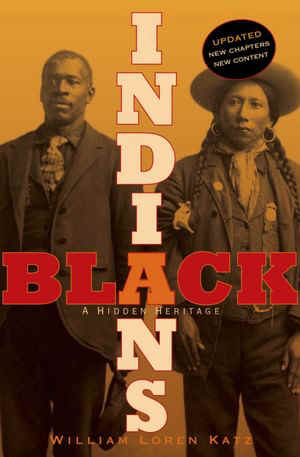
A member of the Black Chickasaw Freedmen's Association. By William Loren Katz As President Bill Clinton and others arrived in Selma, Alabama, for the 42nd anniversary of the "Bloody Sunday" march that prodded Congress to pass the 1965 Voting Rights Act, the Cherokee Nation chose a lower road. It voted overwhelmingly for an amendment to their constitution that revokes citizenship rights for 2,800 members because their ancestors included people of African descent. Marilyn Vann, president of the Descendants of Freedmen of the Five Civilized Tribes, has long fought racism from both governmental officials and indigenous figures. In this instance, she claims, Cherokee leaders misled voters by insisting "freedmen don't have Indian blood," "the freedmen were forced on the tribe," "the freedmen do not have a treaty right to citizenship," "the people have never voted on citizenship provisions in the history of the tribe," and "the amendment will create an all Indian tribe." Cherokee voters were also influenced by the racist charge "that the freedmen if not ejected, would use up all of the tribal service monies.” The design of the amendment, Vann points out, is patently discriminatory. It removes membership from descendants of enrolled African Cherokees whose documentation of Indian ancestry was affirmed by the Dawes Commission more than a century ago as well as those without documentation of Indian ancestry. On the other hand it accepts Cherokee members with white blood or even people whose ancestors are listed as "adopted whites." This development comes at a moment of re-examination of African and Indian alliances that followed 1492. Governor Nicolas de Ovando of Hispaniola arrived in the Americas in 1502 with a Spanish armada that carried the first enslaved Africans. Within a year, Ovando wrote to King Ferdinand that the Africans "fled to the Indians and never could be captured." To the fury of Europeans, Native Americans, the first people enslaved in the New World, accepted African runaways. Indians saw no reason to face the invasion alone. In their maroon colonies beyond the European settlements that dotted the coastlines of the Americas, each group contributed invaluable skills. As victims of the triangular trade, Africans brought their unique experience of European intentions, weapons, and diplomacy. Native American villages offered runaways a safe haven for families and a base for operations, and allowed the two peoples to forge the first "rainbow coalition.” So ubiquitous were maroon communities that a French scholar called them "the gangrene of colonial society." Seeing these alternative societies as a threat to their hegemony, Europeans repeatedly deployed search and destroy armies. British colonial officials in what is now the United States required Indian Nations to sign treaties promising the return of Black runaways. (There is no record of any fugitives being returned!) To keep Native American villages from becoming an escape hatch, officials from Florida Canada offered Indians staggering rewards for runaways. And to that same end, British traders introduced African slavery to the Five Nations -- the Cherokees, Choctaws, Chickasaws, Creeks and Seminoles. Once these Nations adopted European-style dress, Christianity and African bondage, they were called "The Five Civilized Tribes." In Florida permitted guerilla warfare, African Seminoles played a commanding role in a resistance that at times tied up half of the U.S. Army, held the U.S. military forces at bay from 1816 to 1858, took 1500 U.S. military lives, and cost Congress $30,000,000. By Nat Turner's slave rebellion of 1831, southern planters, frantic that leaks in their labor system would have explosive consequences, joined with whites seeking valuable Indian land, to demand removal of the Five Nations. President Martin Van Buren had 7,000 U.S. troops drive 60,000 Indians, including black members, to distant Oklahoma. Thousands perished on this “Trail of Tears,” Cherokees of both lineages comforted one other. Even before they reached Oklahoma African bondage dominated the social, political and economic life of the Five Nations, and created the class and racial divisions evident today. A minority of Cherokees with white blood owned slaves, claimed a superior status and rose to leadership. “Pure Indian blood” Cherokees, the majority, became “inferior.” African Cherokees, slave and free, were relegated to the lowest rung. However in the 1850s Heinrich Mollhausen, a noted German artist, visited the Indian Territory and described a form of bondage unlike any southern plantation: These slaves receive from the Indian masters more Christian treatment than among the Christian whites. The traveler may seek in vain for any other difference between master and servant than such as nature had made in the physical characteristics of the races; and the Negro is regarded as a companion and helper, to whom thanks and kindness are due when he exerts himself for the welfare of the household. In 1860 Cherokees in Oklahoma owned 2,511 slaves, and at the outset of the Civil War, Cherokee leaders, pressured by pro-slavery Indian Agents and virtually surrounded by Confederate armies, agreed to support the Confederacy. However, Opothle Yahola, a Creek chief and pacifist, was able to lead 7,600 people -- including half of the Seminole Nation, Cherokees, Choctaws, Chickasaws, Creeks and others, to Union lines in Kansas. By April 1862 the young men of this multicultural exodus had joined the Union Army and helped free slaves in Missouri. The defeat of the Confederacy allowed U.S. officials to scrap its Indian treaties. Whites who had forced African slavery on Indians now demanded Indians accept Lincoln's "new birth of freedom." The Seminoles, who had long treated their African members as allies rather than slaves, embraced equality. Cherokees followed. African Cherokees soon ran barbershops, blacksmith shops, general stores and restaurants or became ferryboat operators, cotton-gin managers, teachers and postmasters. O.S. Fox, editor of the Cherokee Afro-American was enthusiastic: The opportunities for our people in that country far surpassed any of the kind possessed by our people in the U.S. . . . It is nonsense for any Afro-American to emigrate to Africa or anywhere else if he can make a living in the Indian Territory. In 1879 African Cherokees, petitioning for full equality, based their appeal on a shared history: The Cherokee nation is our country; there we were born and reared; there are our homes made by the sweat or our brows; there are our wives and children, whom we love as dearly as though we were born with red, instead of black skins. There we intend to live and defend our natural rights, as guaranteed by the treaties and laws of the United States, by every legitimate and lawful means. How ironic and sad that people of African Cherokee lineage still have to fight for natural rights being denied them by the New World's first victims of virulent bigotry, imported by the European invaders. __________________________________________________ William Loren Katz is the author of BLACK INDIANS: A HIDDEN HERITAGE and forty other books, and has been associated with NYU for 35 years. His website is: www.WILLIAMLKATZ.com |
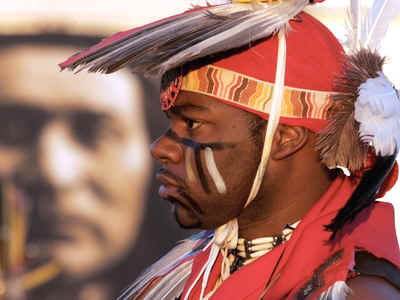
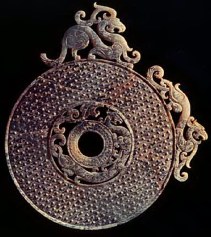
How exactly did the Africans and the Chinese mix to produce the Red Indian and were there Blacks in China as well?
Different tribes have different rules about what constitutes American Indian. The Cherokee Nation, for example, allows you to join if you can document that you are at least 1/16 Cherokee. Source and discussion
Cherokees Pull Memberships of Freed Slaves
By Sean Murphy
OKLAHOMA CITY (3/4/07) - The Cherokee Nation vote this weekend to revoke the citizenship of the descendants of people the Cherokee once owned as slaves was a blow to people who have relied on tribal benefits.
. . .Marilyn Vann, president of the Descendants of Freedmen of the Five Civilized Tribes, said the election results undoubtedly will be challenged.
"We will pursue the legal remedies that are available to us to stop people from not only losing their voting rights, but to receiving medical care and other services to which they are entitled under law," Vann said Sunday.
"This is a fight for justice to stop these crimes against humanity."
Cherokee Nation spokesman Mike Miller said Sunday that election results will not be finalized until after a protest period that extends through March 12. Services currently being received by freedmen descendants will not immediately be suspended, he said. More. . .
_________________
BLACK PRIDE
LATIN AMERICA NEEDS ITS OWN CIVIL RIGHTS MOVEMENT SAYS THE WORLD-FAMOUS RAPPER
By TEGO CALDERON
Tego says skin color's still a major issue for Latinos.
February 15, 2007 -- Just this morning, I was listening to radio host Luisito Vigeroux talking about a movie project that I am working on which co-stars Mayra Santos Febres and he was saying, "Her? She's starring in it?"
Questioning her Black beauty.
I remember, too, when Celia Cruz died, a newscaster, thinking she was being smart, said Celia Cruz wasn't black, she was Cuban. She was pretty even though she's black.
As if there is something wrong with being black, like the two things can't exist simultaneously and be a majestic thing. There is ignorance and stupidity in Puerto Rico and Latin America when it comes to blackness.
In Puerto Rico, Spike Lee's "Malcolm X" was only shown in one theater and unlike all the other movies shown here, there were no subtitles. It's as if they don't want the masses to learn.
But it's not just here - in Puerto Rico - where I experience racism. When I lived in Miami, I was often treated like a second class Boricua. I felt like I was in the middle - Latino kids did not embrace me and African American kids were confused because here I was a black boy who spoke Spanish. But after a while, I felt more embraced by black Americans - as a brother who happens to speak Spanish - than other Latino kids did.
Because I am well known, sometimes I forget the racist ways of the world. But then I travel to places where no one knows Tego Calderón I am reminded.
For instance, when I travel first class, the stewardess will say, "Sir, this is first class," and ask to see ticket. I take my time, put my bags in the overhead, sit, and gingerly give them my ticket, smiling at them. I try not to get stressed anymore, let them stress themselves.
And the thing is that many white Puerto Ricans and Latinos don't get it. They are immune to the subtle ways in which we are demeaned, disrespected. They have white privilege. And I've heard it said that we are on the defensive about race.
Those things happen and it's not because of color, Tego, but because of how you look, how you walk, what you wear, what credit card you have. Then, they spend a couple of days with me, sort of walk in my shoes, and say "Damn negro, you are right."
When I check into hotels and use my American Express they call the credit card company in front of me saying the machine is broken. This happens a lot in U.S. cities but it's not because there is more racism there, it's because they don't know me. When I'm in Latin America, I am known, so it's different. That is not to say that there is less racism. The reality for blacks in Latin America is severe, in Colombia, Venezuela, Peru, Honduras ...
Puerto Rican (and Latin American) blacks are confused because we grow up side by side with non-blacks and we are lulled into believing that things are the same. But we are treated differently.
My parents always celebrated our history. My dad always pointed things out to me. He even left the PIP (Pro-Independence Party) because he always said that los negros and our struggle was never acknowledged.
Maelo (Ismael Rivera) and Tite Curet did their part in educating and calling out the issues. Today, I do my part but I attack the subject of racism directly.
It makes me so happy to see Don Omar call himself el negro and La Sister celebrate her blackness. Now it's in fashion to be black and to be from Loiza. And that is awesome, it makes me so happy. Even if they don't give me credit for starting the pride movement, I know what I did to get it out there.
Young black Latinos have to learn their story. We also need to start our own media, and forums and universities. We are treated like second class citizens. They tell blacks in Latin America that we are better off than U.S. blacks or Africans and that we have it better here, but it's a false sense of being. Because here, it's worse.
We are definitely treated like second class citizens and we are not part of the government or institutions. Take for instance, Jamaica - whites control a Black country.
They have raised us to be ashamed of our blackness. It's in the language too. Take the word denigrate - denigrar - which is to be less than a negro.
In Puerto Rico you get used it and don't see it everyday. It takes a visitor to point out that all the dark skin sisters and brothers are in the service industry.
It's hard in Puerto Rico. There was this Spaniard woman in the elevator of the building where I lived who asked me if I lived there. And poor thing - not only is there one black brother living in the penthouse, but also in the other, lives Tito Trinidad. It gets interesting when we both have our tribes over.
Black Latinos are not respected in Latin America and we will have to get it by defending our rights, much like African Americans struggled in the U.S.
It's hard to find information about our people and history but just like kids research the newest Nintendo game or CD they have to take interest in their story. Be hungry for it.
We need to educate people close to us. I do it one person at a time when language is used and I am offended by it. Sometimes you educate with tenderness, as in the case of my wife, who is not black.
She's learned a lot and is offended when she sees injustices. She gets it. Our children are mixed, but they understand that they are black and what that means. My wife has taught her parents, and siblings, and they, in turn, educate the nephews and nieces. That is how everyone learns.
This is not about rejecting whiteness rather; it's about learning to love our blackness - to love ourselves. We have to say basta ya, it's enough, and find a way to love our blackness. They have confused us - and taught us to hate each other - to self-hate and create divisions on shades and features.
Remember that during slavery, they took the light blacks to work the home, and left the dark ones to work the fields. There is a lot residue of self-hatred.
And each of us has to put a grain in the sand to make it into a movement where we get respect, where we can celebrate our blackness without shame.
It will be difficult but not impossible.
As told to Sandra Guzman
Social Activism is not a hobby: it's a Lifestyle lasting a Lifetime http://blackeducator.blogspot.com